 NutriThrive
Dried curry leaves for hair: an oil and a rinse
A simple coconut oil infusion and rinse with dried curry leaves, what the evidence does and does not show, and why to patch-test first.
Quick answer
Yes, you can use dried curry leaves for traditional hair oil, rinse, and mask methods. Expect a kitchen-herb ritual, not a clinical treatment. Patch-test first. This page covers how to do it with a pantry pouch, how many leaves to use, and what the evidence actually supports.
Who wrote this: Neer, NutriThrive. We pack dried curry leaves in Truganina, Melbourne. This is general traditional-use guidance, not medical or dermatological advice.
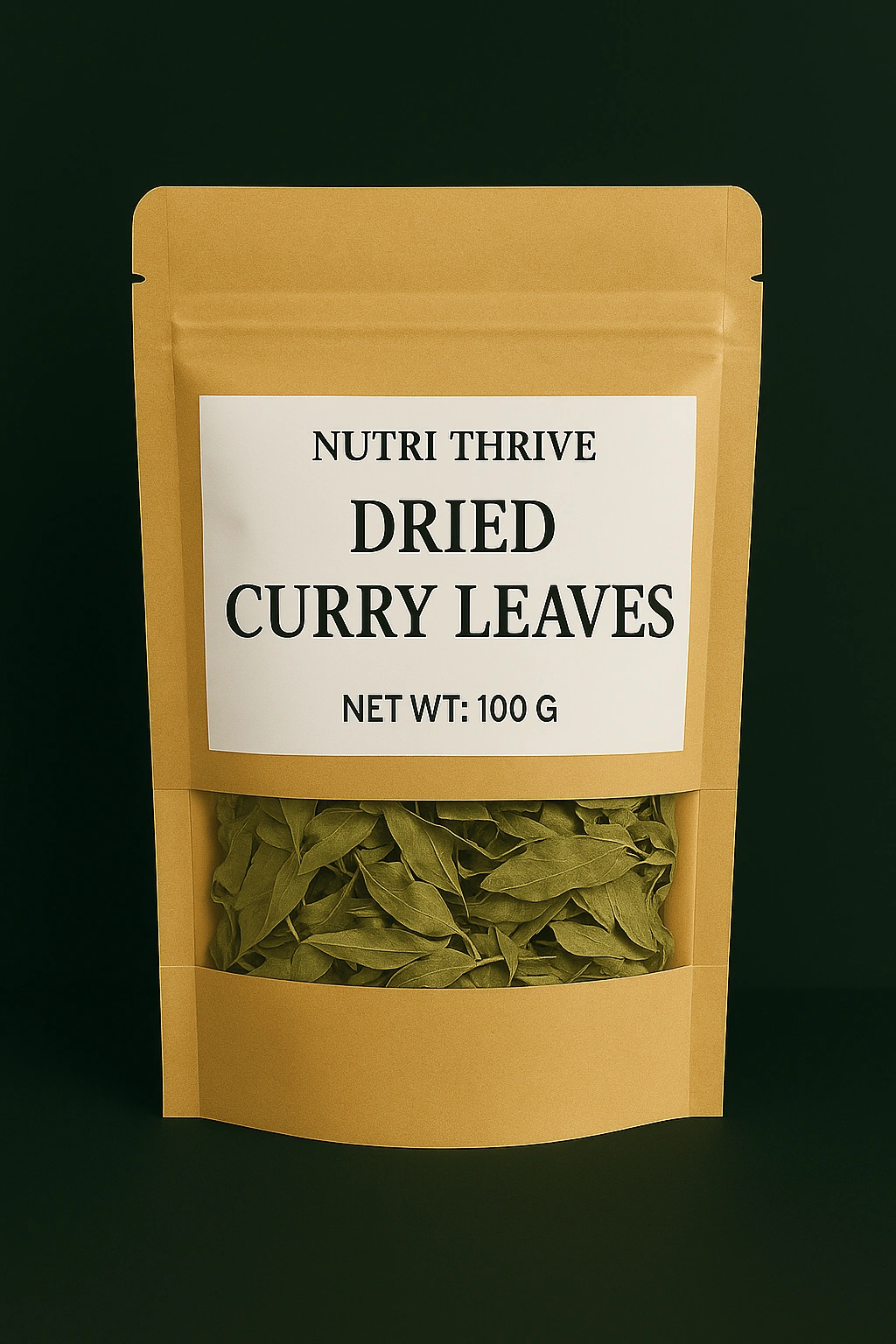
Nearly every guide insists on fresh leaves. If you already keep dried karipatta for cooking, you can use the same pouch. Drying softens some aroma, but oil infusions and rinses were never about the leaf being fresh at the exact moment of use, heat transfers compounds into oil or water either way.
What the evidence really shows
Worth being direct: there is not strong peer-reviewed clinical evidence confirming that curry leaf oil or rinses deliver specific hair outcomes in controlled trials. Traditional Ayurvedic and home use has a long history and plenty of anecdote. That is not the same as a randomised trial.
We will not claim that dried curry leaves will reverse thinning, change pigment, or treat a scalp condition. If you enjoy the ritual and your skin tolerates it, treat it like any other herbal oil or rinse: optional, consistent, and secondary to proven haircare and medical advice when something is wrong.
Patch-test first
Before any scalp use: Apply a small amount of your cooled oil or rinse behind your ear or on your inner wrist. Wait 24 hours. Only continue if there is no redness, itching, or irritation. Stop immediately if you react. People with sensitive skin, scalp conditions, or known plant allergies should ask a clinician before trying new topicals.
Method 1: Coconut-oil infusion
You need: 100 to 150 ml coconut oil (or olive oil) · 2 to 3 tbsp dried curry leaves
- Warm the oil on low heat, do not smoke it.
- Add the dried leaves. Simmer gently 10 to 15 minutes until leaves crisp slightly and the oil takes a faint tint.
- Cool, strain, and store in a clean jar.
- Massage a small amount into the scalp; leave 30 to 60 minutes (or overnight if that suits your hair), then wash as usual.
Once or twice weekly is the usual traditional pace. More is not better if it irritates your scalp or weighs hair down.
Method 2: Curry leaf rinse
You need: A small handful of dried leaves · 500 ml water
- Simmer leaves in water about 10 minutes.
- Cool completely, then strain.
- After shampooing, pour as a final rinse; do not rinse out unless residue bothers you.
Lowest-effort method and a reasonable way to start before committing to oil.
Method 3: Rehydrated leaf mask
Soak 2 to 3 tbsp dried leaves in warm water 15 to 20 minutes. Blend with a spoon of yoghurt or coconut milk into a coarse paste. Apply to lengths (and scalp only if patch-test passed), leave 15 to 20 minutes, rinse. Texture will not match fresh-leaf paste, but it is workable from a dried pouch.
How many dried leaves to use
| Method | Dried leaves | Liquid |
|---|---|---|
| Oil infusion | 2 to 3 tbsp | 100 to 150 ml oil |
| Rinse | Small handful (~1 to 2 tbsp) | 500 ml water |
| Mask / paste | 2 to 3 tbsp (soaked) | Splash of water + yoghurt/coconut milk |
Cooking and haircare can share one pouch, just keep scoops dry and clean. Shop dried curry leaves ($7 / 30g) if you need a fresh pack; product boxes on this page stay on curry leaves only.
Dried vs fresh for these methods
Fresh leaves smell louder in the pan; dried leaves still transfer into warm oil and water. For oil, dried is often more convenient because you already keep a cooking pouch sealed. For paste masks, soak longer if the leaves feel brittle. Quality matters more than fresh-versus-dried marketing: green-grey fragrant leaf beats brown, dusty stock either way.
Consistency over single treatments
Traditional guidance points to regular use over weeks, not one dramatic session. If nothing changes, that is normal, this is not a guaranteed cosmetic result. Keep expectations aligned with the evidence section above.
How often to use an oil or rinse
Traditional kitchen use of curry leaf oil is occasional, once a week is a common home rhythm, not a daily treatment schedule. Start slowly so you can notice whether your scalp likes the oil base. Coconut oil alone can feel heavy on fine hair; if that is you, use less oil, focus on lengths, or prefer the rinse method.
None of these methods replace medical care for hair loss, scalp disease, or sudden shedding. They are cosmetic kitchen rituals with a long cultural history and limited clinical evidence in humans. Keep claims honest: you are scenting and conditioning hair with a leaf-infused oil or rinse, not running a medical protocol.
When you want more leaf for cooking and cosmetic experiments from the same pouch, buy dried curry leaves online ($7 / 30g).
FAQ
Can dried curry leaves be used for hair?
Yes. Many traditional oil and rinse methods work with dried leaf. Rehydrate in warm oil or water; patch-test before first use.
Is there strong clinical proof curry leaves change hair outcomes?
No. There is not strong peer-reviewed clinical evidence confirming specific hair outcomes from curry leaf oil or rinses. This is traditional and anecdotal use, not a clinically proven treatment.
How do I make curry leaf hair oil with dried leaves?
Warm coconut or olive oil on low heat, add a generous handful of dried leaves, simmer gently 10 to 15 minutes, strain, cool, and massage into the scalp. Patch-test first.
How many dried leaves do I need?
For one oil batch: about 2 to 3 tablespoons dried leaves per 100 to 150 ml oil. For a rinse: a small handful in 500 ml water.
Should I patch-test?
Yes. Apply a little oil or rinse behind the ear or on the inner wrist, wait 24 hours, and only continue if there is no redness or irritation.
Written by Neer, founder, NutriThrive Australia. General information only, not medical advice.
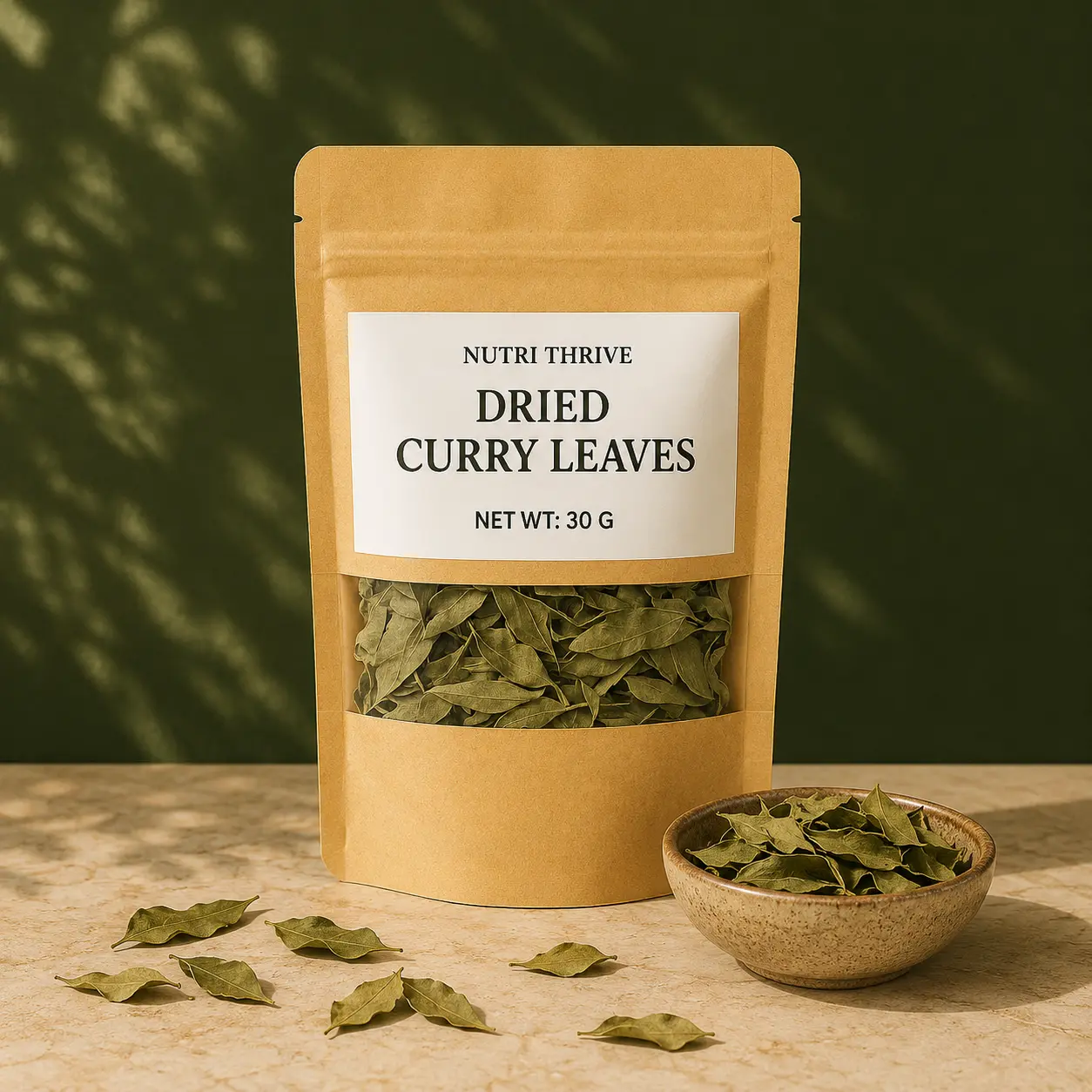
Sun-dried curry leaves
Whole-leaf pouch for cooking, and for traditional oil or rinse methods if you choose. $7 / 30g. Packed in Melbourne.
Update log
- 4 Oct 2026: Methods expanded; honest evidence; patch-test box; no outcome claims; FAQPage schema.
- 21 Jun 2026: Article published.
A practical next step
Dried Curry Leaves
Farm-grown karipatta from our own farm.
$7.00 / 30g