 NutriThrive
Dried Curry Leaves Australia: Uses, Storage, Health Benefits & Cooking Guide
In this guide
Pantry-ready dried curry leaves — shop NutriThrive curry leaves with delivery Australia-wide.
View curry leavesIntroduction: Why curry leaves are becoming popular in Australia
Walk into any authentic South Indian kitchen and you’ll probably hear the crackle of curry leaves hitting hot oil. That aroma — fresh, citrusy, slightly nutty — is one of the defining flavours of many Indian dishes.
In Australia, interest in curry leaves has grown quickly over the last decade. As Indian, Sri Lankan and Malaysian cuisine become more common in Melbourne, Sydney and Brisbane, home cooks are looking for ways to recreate those flavours at home.
The challenge? Fresh curry leaves can be difficult to find.
While some Indian grocery stores stock them occasionally, they are not always available in mainstream supermarkets. Because of this, many Australian cooks now keep dried curry leaves in their pantry as a reliable alternative.
For cooks in Melbourne, Sydney and Brisbane, dried curry leaves have become a convenient pantry staple when fresh leaves are difficult to find.
They last much longer, are easier to store, and still provide the distinctive aroma that makes curry leaves so special. Whether you are making dal, rice dishes, chutneys or herbal teas, dried curry leaves can bring authentic flavour to everyday cooking.
In this guide, we’ll explore:
- what curry leaves actually are
- how dried leaves compare with fresh ones
- how to cook with them properly
- their nutritional benefits
- how to store them correctly
- where to buy curry leaves in Australia
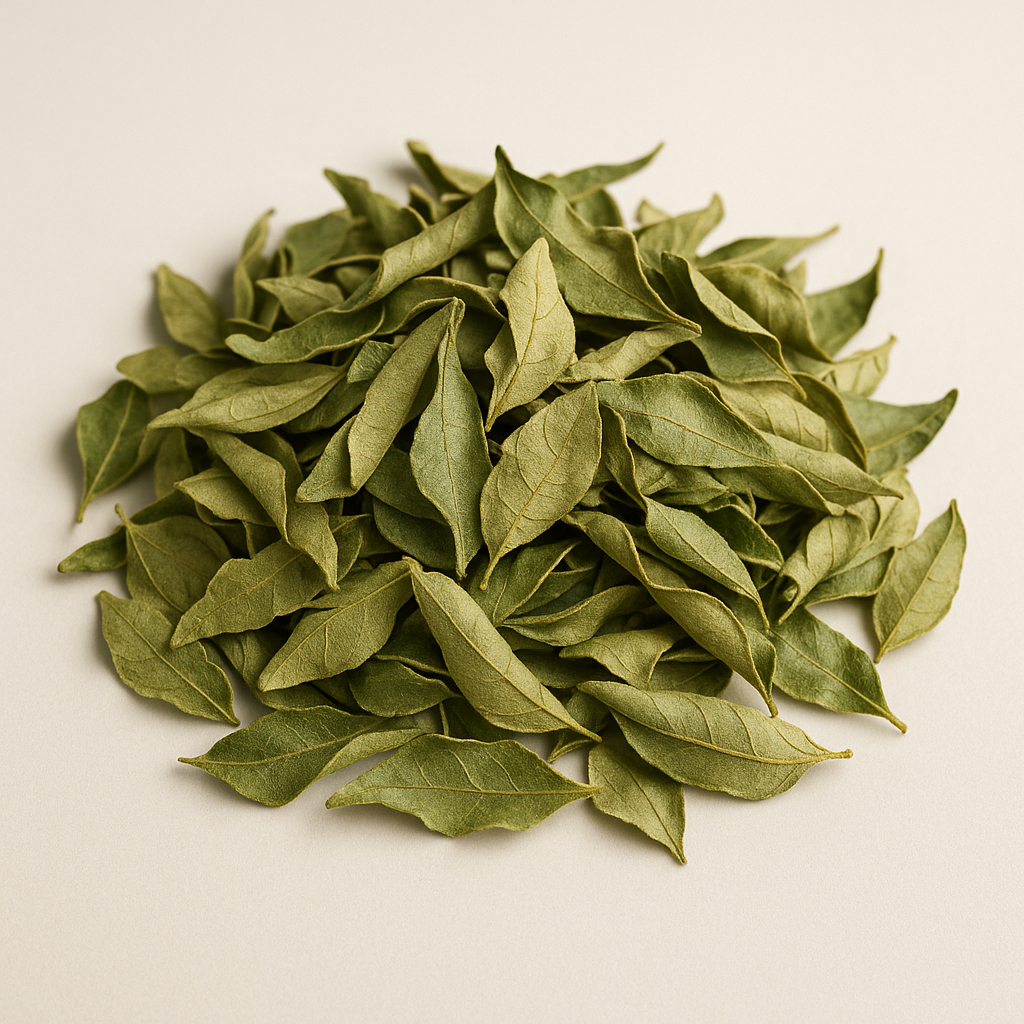
What are curry leaves?
Curry leaves come from the tropical plant Murraya koenigii, which is native to India and Sri Lanka. The leaves are widely used across South Asian cooking and are valued for their aromatic oils and distinctive flavour.
Despite the name, curry leaves have nothing to do with curry powder.
Curry powder is a spice blend that may contain turmeric, cumin, coriander, fenugreek and other spices. Curry leaves, on the other hand, are a fresh ingredient used to flavour dishes during cooking.
Their flavour is difficult to describe precisely, but many cooks say it combines notes of:
- citrus
- toasted nuts
- herbs
- subtle bitterness
When fried briefly in oil, curry leaves release essential oils that perfume an entire dish. That’s why they are often used early in cooking, especially in a technique called tempering.
Curry leaves are used widely in:
- Indian cuisine
- Sri Lankan cooking
- Malaysian and Singaporean dishes
- South Asian spice blends
While fresh leaves provide the strongest aroma, dried leaves are much easier to store and are increasingly popular among Australian home cooks.
Fresh vs dried curry leaves
Fresh curry leaves are usually considered the gold standard in traditional cooking. However, dried curry leaves offer a practical alternative, especially for people who don’t have access to fresh leaves regularly.
Here’s a simple comparison:
| Feature | Fresh leaves | Dried leaves |
|---|---|---|
| Shelf life | Around 1 week | 6–12 months |
| Flavor | Strong and vibrant | Slightly milder |
| Availability | Limited outside specialty stores | Widely available |
| Convenience | Requires refrigeration | Pantry friendly |
The main difference is intensity. Fresh leaves contain more natural oils, so their flavour is stronger. However, dried leaves still provide a similar aroma when cooked properly.
A simple rule many cooks follow is:
Use two to three times more dried curry leaves than fresh ones.
For example, if a recipe calls for 10 fresh leaves, you might use around 20–25 dried leaves instead.
Dried leaves are particularly useful for everyday cooking because they last longer and are always ready to use.
Culinary uses of dried curry leaves
One of the reasons curry leaves are so popular is their versatility. They can be used in many dishes and cooking techniques.
Tempering (tadka)
Tempering — also known as tadka — is one of the most common ways to use curry leaves.
In this technique, whole spices and curry leaves are briefly fried in hot oil or ghee. This releases their aroma and creates a flavour base for the dish.
A typical tempering might include:
- mustard seeds
- cumin seeds
- dried chilli
- garlic
- curry leaves
Once fried, this mixture is poured over dals, vegetables or rice.
Dal and lentil dishes
Curry leaves are a key ingredient in many lentil dishes like dal and sambar. The leaves add a fragrant note that balances the richness of the lentils and spices.
When dried curry leaves are used in these dishes, they are usually fried first in oil to release their flavour.
Curry leaf rice
Curry leaf rice is a simple but flavorful dish often served in South India.
It usually involves:
- frying curry leaves with spices
- mixing them with cooked rice
- adding roasted peanuts or lentils
The result is aromatic, savoury rice with a distinctive herbal flavour.
Chutney powder
In South Indian cooking, roasted curry leaves are sometimes ground with lentils, chillies and spices to create a dry chutney powder called karuveppilai podi.
This powder can be sprinkled over rice with ghee or used as a condiment.
Curry leaf tea
Some people also use curry leaves to make herbal tea.
Dried leaves can be steeped in hot water for several minutes to produce a mild, herbal drink. While the flavour is subtle, it is sometimes consumed for digestion and general wellness.
Health benefits of curry leaves
Beyond their culinary value, curry leaves also contain a range of beneficial plant compounds.
Studies suggest that curry leaves contain antioxidants that may help reduce oxidative stress in the body. They are also rich in vitamins and minerals that support overall health.
Some potential benefits associated with curry leaves include:
- antioxidant activity
- digestive support
- blood sugar regulation
- anti-inflammatory compounds
- iron content
In traditional medicine systems such as Ayurveda, curry leaves have long been used to support digestion and metabolic health.
However, it’s important to remember that curry leaves are primarily a culinary ingredient, not a medical treatment. They can be part of a healthy diet but should not be relied upon as a cure for health conditions.
Nutritional profile of curry leaves
Curry leaves contain several important nutrients that contribute to their health value.
| Nutrient | Benefit |
|---|---|
| Vitamin A | Supports skin and eye health |
| Vitamin C | Helps support immune function |
| Iron | Important for red blood cell formation |
| Antioxidants | Help protect cells from oxidative stress |
Because curry leaves are usually consumed in small quantities, they are not a major source of calories or macronutrients. However, they still provide valuable micronutrients and plant compounds.
How to store dried curry leaves
Proper storage helps preserve the aroma and flavour of dried curry leaves.
Because the leaves contain natural oils, they can lose their fragrance if exposed to air, heat or moisture for long periods.
To keep them fresh:
- Use an airtight container. Glass jars or sealed pouches work best.
- Store in a cool, dry place. Avoid placing them near the stove or oven.
- Protect them from sunlight. Light can break down the aromatic oils.
- Keep them dry. Moisture can cause clumping or spoilage.
When stored properly, dried curry leaves can last six to twelve months while still retaining their flavour.
For more detail, see our guide to storing dried curry leaves.
Where to buy curry leaves in Australia
Finding curry leaves in Australia is easier today than it used to be, but availability still varies depending on location.
Some common places to look include:
Indian grocery stores. These are the most reliable places to find fresh or dried curry leaves.
Asian supermarkets. Some larger Asian grocery stores carry curry leaves in the herbs or spice section.
Online specialty stores. Many Australian retailers now sell dried curry leaves online, which makes them accessible even in areas without Indian grocery stores.
Some Australian wellness brands such as Nutri Thrive offer carefully dried curry leaves packaged to maintain freshness and aroma.
Buying from suppliers that package leaves properly helps preserve their flavour and shelf life.
Common cooking mistakes
Even experienced cooks sometimes make mistakes when using curry leaves.
Here are a few common ones:
- Adding them too late in cooking. Curry leaves release flavour when heated, so they should usually be added early.
- Not frying them first. Tempering the leaves in oil helps release their essential oils.
- Using too few dried leaves. Dried leaves are milder than fresh ones, so recipes often need more.
- Improper storage. Leaving curry leaves exposed to air or sunlight can quickly reduce their aroma.
Avoiding these mistakes can dramatically improve the flavour of your dishes.
Frequently asked questions
Fresh curry leaves generally have a stronger flavour, but dried curry leaves are still very useful in cooking and have a much longer shelf life.
When stored in an airtight container in a cool, dry place, dried curry leaves can last 6–12 months.
Yes, they can be eaten raw, but their flavour is usually stronger and more pleasant when cooked.
Yes. Some people steep dried curry leaves in hot water to create a mild herbal tea.
Related: Uses & how to cook · Storage tips · Science & benefits