 NutriThrive
GLP-1 / Ozempic: Closing the Nutrition Gaps
GLP-1 medications like Ozempic can create real nutrition gaps as appetite drops. Here's what to actually eat to protect muscle and energy.
7 min read · Nutrition
GLP-1 medications like Ozempic, Wegovy, Mounjaro and their generics have changed the conversation around weight management faster than almost anything else in nutrition in the last few years. One side effect of how well they work is rarely talked about upfront: eating significantly less, consistently, over months, can mean missing nutrients you'd normally get from a fuller diet.
This isn't a "natural alternative to Ozempic" post, that's not a claim for any food or supplement to make, and we won't make it. This is about something more practical. If you (or someone you're supporting) are eating roughly 20% less on a GLP-1 medication, what's actually at risk nutritionally, and how do you realistically cover the gap.
Why GLP-1 medications create nutrition gaps
GLP-1 medications work in part by slowing digestion and increasing satiety: you feel full sooner and stay full longer, which is the entire point. The flip side is that total food volume drops, often substantially, and if the food you are eating isn't deliberately nutrient-dense, you can end up eating enough calories to feel fine day-to-day while still falling short on specific vitamins, minerals, and protein.
This has become enough of a recognised pattern that the supplement industry is actively building products specifically aimed at GLP-1 users to help cover these gaps. It's not a fringe concern, it's a documented trend tracked across the nutrition industry.
The gaps that come up most often
Protein. Appetite suppression often hits protein-rich foods (meat, legumes, eggs) hardest simply because they take more effort to eat. Inadequate protein alongside rapid weight loss increases the risk of losing muscle mass along with fat, which isn't the outcome anyone wants.
Fibre. Smaller meals often mean smaller vegetable portions, and fibre intake can drop accordingly, which can also worsen the constipation that's already a common side effect of GLP-1 medications.
B vitamins and iron. Reduced overall food volume, especially reduced meat and whole grain intake, can affect B12 and iron status over time, both of which are already common gaps in the general population.
Hydration and electrolytes. GLP-1 medications can blunt thirst signals for some people, and dehydration tends to make nausea and fatigue worse, not better.
A practical approach, not a supplement stack
You don't need to buy ten different products to manage this. The general shape that registered dietitians and GLP-1-focused nutrition guides consistently recommend is:
- Lead every small meal with protein. Since you're eating less overall, make sure what you do eat starts with protein: eggs, Greek yoghurt, fish, tofu: before anything else, so it doesn't get crowded out by the time you're full.
- Choose nutrient-dense over empty-volume. When appetite is limited, a teaspoon of something nutrient-dense added to a smaller meal does more per bite than diluting a small meal with low-nutrient filler.
- Sip steadily rather than eating or drinking in large amounts. Smaller, more frequent intake: both food and fluids: tends to sit better and reduces nausea compared to trying to eat normal-sized meals less often.
- Keep iron and B-vitamin sources in rotation, even in small amounts, rather than skipping entire food groups because portions are small across the board.
Where moringa fits in this specific context
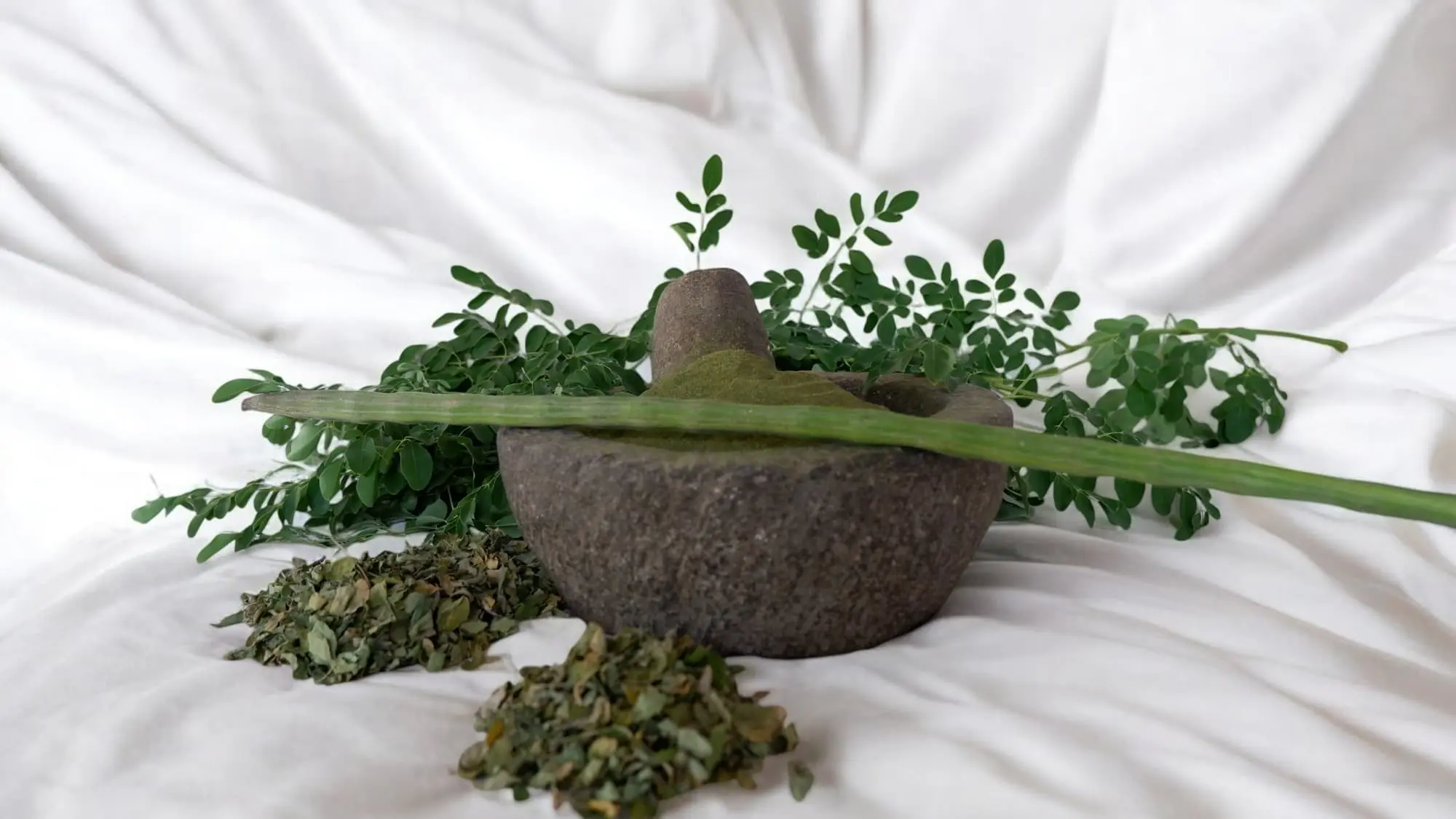
This is a genuinely sensible use case for a nutrient-dense plant powder, separate from any of the broader wellness claims floating around. A teaspoon of moringa stirred into a smaller smoothie or yoghurt adds iron, vitamin C, calcium and plant protein in a small volume, which matters specifically when total food volume is down and every bite needs to count more than it used to.
It's not a protein source on its own (it has some plant protein, but not enough to replace dedicated protein foods), and it's not a multivitamin replacement. It's a low-effort way to add density to a smaller meal, which is exactly the problem GLP-1 users are dealing with.
What this isn't
To be direct: moringa is not a GLP-1 medication, doesn't replicate what Ozempic or similar drugs do pharmacologically, and isn't a substitute for medical supervision if you're on one of these medications. If you're currently taking a GLP-1 medication, your prescribing doctor or a dietitian familiar with GLP-1 nutrition should be the one guiding your overall nutrition plan: this is meant as one practical, low-cost piece of that picture, not the whole plan.
FAQ
Does moringa work like Ozempic?
No. Moringa doesn't act on GLP-1 receptors the way the medication does, and it isn't a weight-loss drug substitute. It's a nutrient-dense food that can help fill nutritional gaps that show up when you're eating less on a GLP-1 medication.
What nutrients should GLP-1 users watch most closely?
Protein, fibre, B12, iron, and hydration come up most consistently in nutrition guidance for GLP-1 users, largely because reduced food volume hits these hardest first.
Can I take moringa alongside Ozempic or Wegovy?
There's no known specific interaction, but you should check with your prescribing doctor or pharmacist before adding any new supplement or food powder while on a GLP-1 medication, particularly if you're also taking other medications.
Will eating moringa help me lose weight on Ozempic?
That's not a claim we're going to make. Moringa is a nutrient top-up, not a weight-loss accelerant. Your weight loss on a GLP-1 medication is driven by the medication and your overall eating pattern, not by any single food added to it.
What's the easiest way to add moringa if I have low appetite?
A half teaspoon stirred into a small smoothie, yoghurt, or even soup after cooking is the lowest-effort way to add it without needing extra appetite or meal volume you don't have.
Written by Neer. Founder, NutriThrive Australia. Neer runs sourcing, lab testing and fulfilment from the Truganina warehouse.
Shop Moringa Powder: $11 → · How to add moringa to your diet →
These statements have not been evaluated by the TGA. This product is a food ingredient, not intended to diagnose, treat, cure, or prevent any disease, and is not a weight-loss product or a substitute for GLP-1 medication. If you are taking Ozempic, Wegovy, Mounjaro or another GLP-1 medication, speak with your prescribing doctor or a dietitian before changing your diet or adding any new supplement.
Nutrient density for smaller meals
NutriThrive moringa powder: shade-dried, tested in Australia, UV-protected foil packaging. $11/100g, one teaspoon per day. Ships from Melbourne.
Shop moringa powder →Last updated: 21 June 2026
Update history
- Cluster hub: The Best Anti-Inflammatory Foods to Eat Every Day (Australian Guide 2026)
- June 2026: Initial publication. Covers GLP-1 nutrition gaps, practical eating guidance, and where moringa fits as a nutrient top-up.

A practical next step
Moringa Powder
Grown on our farm, shade-dried and manufactured by NutriThrive. Tested in Australia and packed in Truganina. Same-day dispatch before 2pm, Monday to Friday.
$11.00 / 100g