 NutriThrive
What Does Moringa Powder Taste Like? (And How to Mix It)
Honest taste guide: earthy and mildly bitter in water — easy in smoothie, yoghurt, or food. How Australians actually use moringa powder daily.
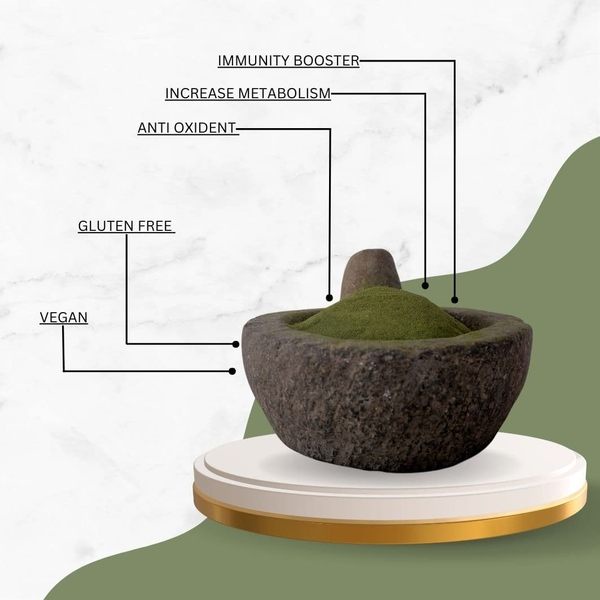
Does moringa powder taste bad? It has a naturally earthy, grassy, slightly bitter flavour. In plain water that flavour is obvious, and most people dislike that glass. Mixed into a smoothie, yoghurt, juice, or savoury food, most people barely notice it.
Quick Answer
Taste: earthy / grassy, like warm hay and split peas, not smoothie-sweet.
Bitterness: mild to moderate when the powder is fresh. Harsh bitterness is often a quality problem.
Best mixed with: frozen mango or banana, cacao, oat milk, yoghurt, soup. Worst: boiling water, or a tablespoon in a glass of water.
If you’re new to moringa powder, start with our complete guide to choosing moringa powder in Australia. Don’t like the earthy taste? The mixes below usually fix it. Wondering whether powder or capsules are easier? See our moringa powder vs capsules comparison.
Does moringa powder taste bad?
Straight in water: yes, for most people. That is the honest answer. The flavour is not rotten or chemical. It is a green-leaf taste, vegetable stock more than a wellness latte, and water does nothing to hide it.
In food, the same powder is easy. Frozen mango or banana covers the hay note almost completely. Cacao and peanut butter cancel the bitterness. Oat milk plus honey turns it into something you can drink every morning. Stir it through soup, pesto, or eggs and you get the leaf without tasting it.
What it actually tastes like
Fresh, shade-dried moringa powder tastes like warm hay and cooked split peas with a faint peppery finish. It is greener and drier than spinach, less sweet than matcha, and more “vegetable stock” than “wellness latte.” The smell is pleasant, cut grass after rain, but the solo sip in water surprises people who expected something sweet.
Colour tells you a lot: bright emerald green usually means careful drying; dull khaki often means age, sun exposure, or fillers. Harsh bitterness that coats the tongue is often a quality signal, not “moringa being moringa.” If you want the buying checks behind that, see how to choose moringa powder.
What makes it worse
Boiling water. Heat pulls bitter polyphenols forward. Use water around 75°C for tea, our moringa tea recipes start there.
Too much powder. Start with half a teaspoon, not a tablespoon.
Cow’s milk. Can curdle or taste odd; oat or almond milk blends more cleanly.
Water only. Skip the punishment glass, mix it into food or a smoothie. Daily ideas live in how to add moringa to your diet.
What makes it disappear
Frozen mango or banana. Tropical sweetness masks the hay note almost completely. Try the moringa smoothie recipes if you want exact amounts.
Cacao + peanut butter. Bitter-on-bitter cancels out in a smoothie.
Oat milk latte + honey. Creaminess integrates the green flavour.
Savoury stir-through. Soup, pesto, or eggs, the leaf without the taste.
How to use moringa powder without the bad taste
Most people dislike moringa powder stirred into plain water. That is normal. Treat it like a strong leafy green, not a flavoured drink mix.
- Start small — about ½ teaspoon — until you know your mix.
- Blend into a smoothie (banana, mango, berries, or peanut butter hide bitterness).
- Stir into thick yoghurt or a smoothie bowl.
- Mix into savoury food (soups, dal, scrambled eggs, pesto) where earthiness fits.
- Avoid judging the powder from a straight water shot on day one.
- Keep the jar sealed and dry so the flavour stays “green,” not stale.
When you want powder you can dose by the teaspoon: Shop moringa powder.
How to eat moringa powder
If you searched how to eat moringa powder, think food first, drink second. The leaf powder is easiest when it rides along with something you already eat: breakfast smoothie, yoghurt, overnight oats, or a savoury lunch. Capsules skip taste entirely, but powder wins for flexible dose and value — see our capsules vs powder guide if you are still deciding format.
Practical plate ideas: ½–1 teaspoon in a berry smoothie; stirred through Greek yoghurt with honey; whisked into soup off the boil; or blended into a green sauce. Full recipe paths live in our how-to-add guide.
What to mix moringa powder with
Best mixers for taste: banana or mango smoothie; yoghurt; chocolate protein shake; peanut butter smoothie; tomato-based soup; pesto; overnight oats.
Coffee: yes, you can mix a small amount into a coffee smoothie or iced coffee blend — flavour is stronger than in fruit smoothies, so start tiny. See also our coffee comparison guide for energy-habit context (moringa is not a caffeine swap).
If you already tried it and hated it
Try a quarter teaspoon in a mango smoothie before writing it off. Check whether you used boiling water or an old brownish powder. Most “I hate moringa” stories are technique or freshness problems, not a universal taste verdict.
If you have already tried the mixes and still cannot stand it, capsules skip the flavour entirely. They cost more per gram of leaf. That trade-off is in the powder vs capsules guide.
Also useful: quality checklist · shade vs sun drying.
FAQ
Does moringa powder taste bad?
In water alone, most people dislike it. In a smoothie, latte, yoghurt, or savoury food, most people can’t taste it.
What does moringa taste like?
Earthy, grassy, slightly bitter, faintly peppery. Like warm hay and split peas, not sweet like a green smoothie.
Is moringa powder bitter?
Mild to moderate bitterness is normal. Harsh bitterness that coats the tongue often means old or poorly dried powder.
Does moringa taste like matcha?
Same category. Moringa is more intensely green and slightly more bitter, less sweet. They are not interchangeable in recipes.
Why does moringa taste awful to me?
Common reasons: old powder, boiling water used, or trying it straight in water. Fresh shade-dried powder in a mango smoothie or latte tastes completely different from stale powder in plain water.
How do I make moringa powder taste better?
Blend with frozen banana or mango, mix into yoghurt with honey, stir into oat milk latte, or fold into pesto or soup. Fat and sweetness mask the earthy notes. Start with a quarter teaspoon.
How to use moringa powder without the bad taste?
Most people dislike it in plain water — that is normal. Treat it like a strong leafy green: start with about ½ teaspoon, blend into a banana/mango smoothie or thick yoghurt, or stir into soup, dal, eggs, or pesto. Do not judge it from a water shot on day one, and keep the jar sealed so the flavour stays green, not stale. When you want powder you can dose by the teaspoon: Shop moringa powder.
Does moringa powder have caffeine?
Moringa leaf powder is not a coffee-style caffeine drink. Do not treat it as a stimulant pre-workout or espresso replacement. If you are sensitive to stimulants, still introduce any new powder slowly with food. For training timing, see our before/after workout guide — habits, not miracle claims.
How to take moringa powder?
Mix ½–1 teaspoon into food or a smoothie once daily to start. Prefer food mixes over plain water. For recipe detail, read how to add moringa to your diet. Ready for powder: Shop moringa powder.
Written by Neer. NutriThrive Australia.
Ready to Try Moringa?
Shop moringa powder — packed fresh in Melbourne. Same-day dispatch.
Update log
- 24 Sep 2026: Title and meta revised for mix/eat queries; added how-to-use, how-to-eat, and what-to-mix body sections plus caffeine and how-to-take FAQs.
- 30 Aug 2026: Title, opening answer, and internal links rewritten around “does it taste bad?” queries.
- 29 Jun 2026: Article published.

Ready to try it
See current sizes and pricing
If the taste tips sound workable, compare the 100g, 200g and 400g pouches packed in Truganina.
$11.00 / 100g