When to Stop Caffeine for Better Sleep
By Neer, NutriThrive Truganina · Last updated: 9 Aug 2026
Quick Answer
Most people should stop caffeine 8–10 hours before bed. Caffeine has a half-life of roughly 5–6 hours in an average adult, meaning half of a 2pm coffee is still in your system at 8pm. This is the single biggest reason people fall asleep fine but wake up at 2am wired.
- Caffeine’s half-life is 5–6 hours on average — genetics change this a lot, person to person
- A 2pm coffee can still leave a quarter of its caffeine in your system by 10pm
- Switching your last cup to something lower in caffeine (not zero) is often easier to stick to than cutting caffeine cold
Why “I can drink coffee and fall asleep fine” doesn’t mean you’re in the clear
Falling asleep and staying asleep are two different things. Caffeine mainly disrupts deep sleep — the restorative stage — even when it doesn’t stop you nodding off. A lot of people who feel like caffeine “doesn’t affect” their sleep are actually losing sleep quality without noticing it, because they never see the deep-sleep data (unless they’re tracking it).
The half-life math, in plain terms
If you drink a coffee with 95mg of caffeine at 2pm:
- By 8pm (6 hours later): roughly 47mg still in your system
- By 2am (12 hours later): roughly 24mg still in your system
That’s why the general guidance from sleep researchers is to stop caffeine 8–10 hours before your target bedtime, not just “don’t drink coffee after lunch” as a vague rule.
What actually happens if you switch your last cup, instead of cutting it
Going from a 3pm coffee (about 95mg) straight to nothing is a hard habit to keep — most people don’t. A lower-caffeine swap is often easier to sustain long-term than an outright cutoff, simply because it doesn’t feel like deprivation.
| Drink | Caffeine (approx. per cup) | Good for |
|---|---|---|
| Coffee | 80–100mg | Morning only if protecting sleep |
| Black tea (e.g. Darjeeling) | 40–50mg | Afternoon cup, lower stimulant load |
| Green tea | 25–35mg | Late afternoon |
| Herbal/rooibos | 0mg | Evening |
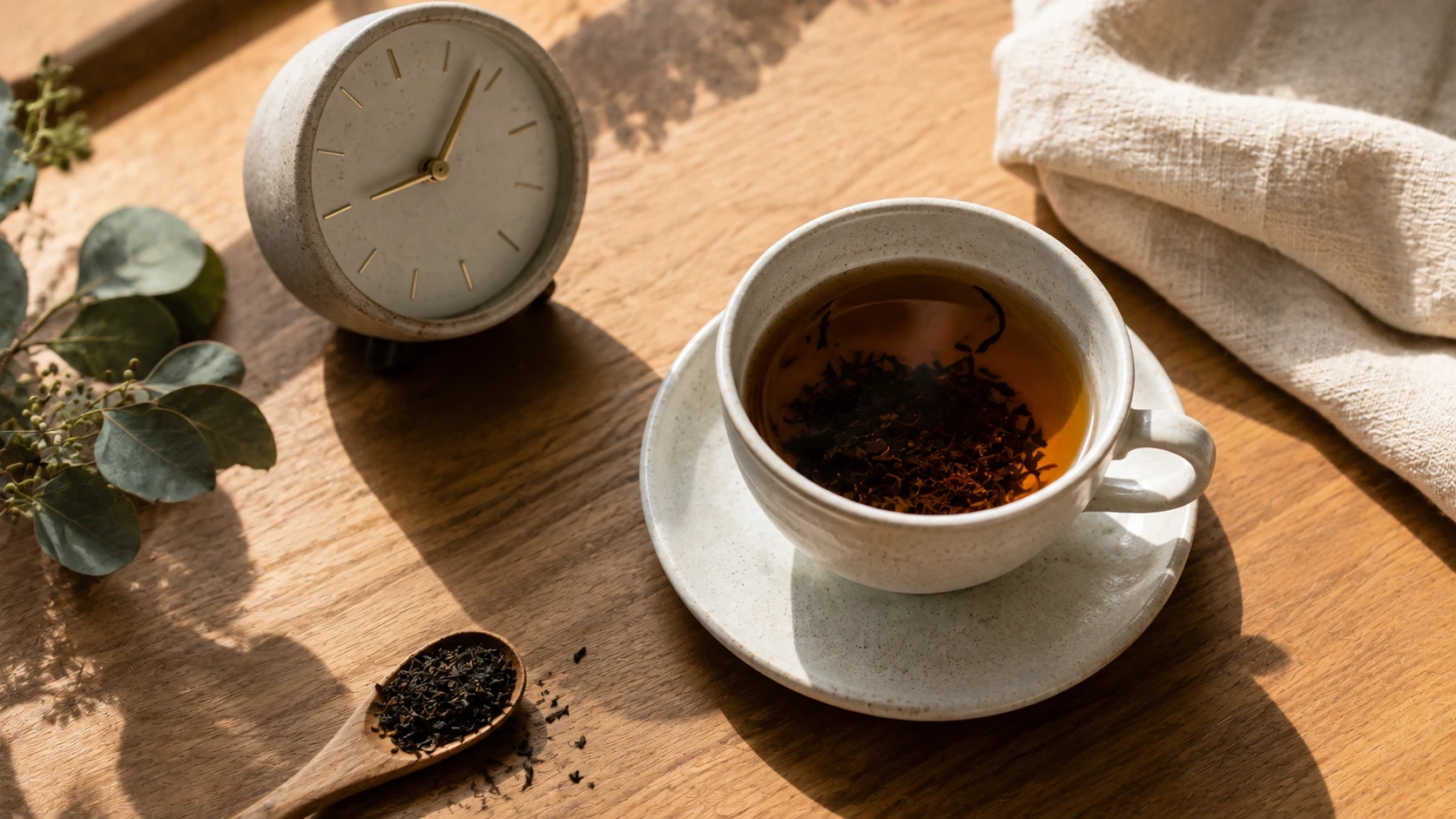
A cup of loose-leaf Darjeeling sits at roughly half the caffeine of a standard coffee — which is why some people use it as a step-down option in the early-to-mid afternoon rather than switching straight to zero-caffeine. It’s not a sleep aid and won’t fix insomnia on its own; it’s simply a lower-caffeine option for people trying to move their last stimulant earlier in the day. Darjeeling black tea →
A simple way to test your own cutoff
Individual caffeine sensitivity varies a lot based on genetics (the CYP1A2 gene, if you want the specific term). Instead of following a generic rule, try this for one week: note your last caffeinated drink’s time and rate your sleep quality (not just whether you fell asleep) the next morning on a 1–5 scale. Move your cutoff 30 minutes earlier each time your average dips, until it stabilises. That’s your actual number, not a guess from an article.
FAQ
Written by Neer. NutriThrive Australia.
Steady energy without the crash: black tea vs coffee · Shop Darjeeling black tea · Sleep Health Foundation Australia (external)
This is general information, not medical advice. If you have ongoing sleep issues, speak with your GP. These statements have not been evaluated by the TGA.
Swap Your Afternoon Coffee?
Lower your afternoon caffeine without losing the ritual. Shop our Darjeeling loose leaf tea: packed fresh in Melbourne. Same-day dispatch.
Update log
- 9 Aug 2026: Article published.