 NutriThrive
Curry Leaves for Heart Health and Cholesterol. What the Research Shows (2026)
Curry leaves and heart markers: LDL, triglycerides and blood pressure, what studies show and how it applies to cooking. Read the practical NutriThrive guide.
Quick Answer
Some animal studies and a small number of human trials suggest curry leaves may reduce LDL cholesterol and triglycerides while raising HDL cholesterol. The mechanism proposed involves carbazole alkaloids in the leaves preventing cholesterol oxidation and LDL buildup in arteries. Evidence is preliminary, not a proven medical treatment.
Curry leaves have a long tradition in Ayurvedic use for cardiovascular health, and there’s now some research looking at the specific mechanisms that might support that traditional use.
The compounds responsible
Curry leaves contain several compounds relevant to cardiovascular health:
Carbazole alkaloids: the same class of compounds that gives curry leaves their distinctive aromatic quality. Some carbazole alkaloids have been studied for their ability to inhibit LDL cholesterol oxidation (the process that makes LDL particularly damaging to arteries) and reduce cholesterol accumulation in blood vessels.
Quercetin and kaempferol: flavonoid antioxidants present in curry leaves, also found in onions and other vegetables. Both have established antioxidant and anti-inflammatory properties relevant to cardiovascular protection.
Fibre: contributes to the general dietary cholesterol-reduction effect of fibre-rich diets by binding bile acids in the gut.
What the research shows
Animal studies have fairly consistently found that curry leaf consumption reduces total cholesterol, LDL, and triglycerides while raising HDL. The mechanisms proposed (carbazole alkaloids, fibre, antioxidants) are biologically plausible and supported by the lab findings.
Human clinical evidence is more limited. Some small human studies have found similar trends. A randomised study involving obese subjects found significant reductions in total cholesterol and LDL with curry leaf supplementation. These are small studies and can’t be considered definitive.
What this means practically
Curry leaves as a regular part of cooking contribute to a plant-rich, antioxidant-rich diet: the dietary pattern most consistently associated with better cardiovascular health outcomes. This is a real contribution from a genuinely nutritious herb. It’s not the same as taking a cholesterol-lowering medication and should not replace medical treatment for clinically elevated cholesterol.
The practical implication. If you’re already cooking South Asian food with curry leaves regularly, you’re likely getting the cardiovascular benefit as a natural by-product of how you eat. If you’re new to curry leaves, the health evidence is another reason beyond flavour to use them more often.
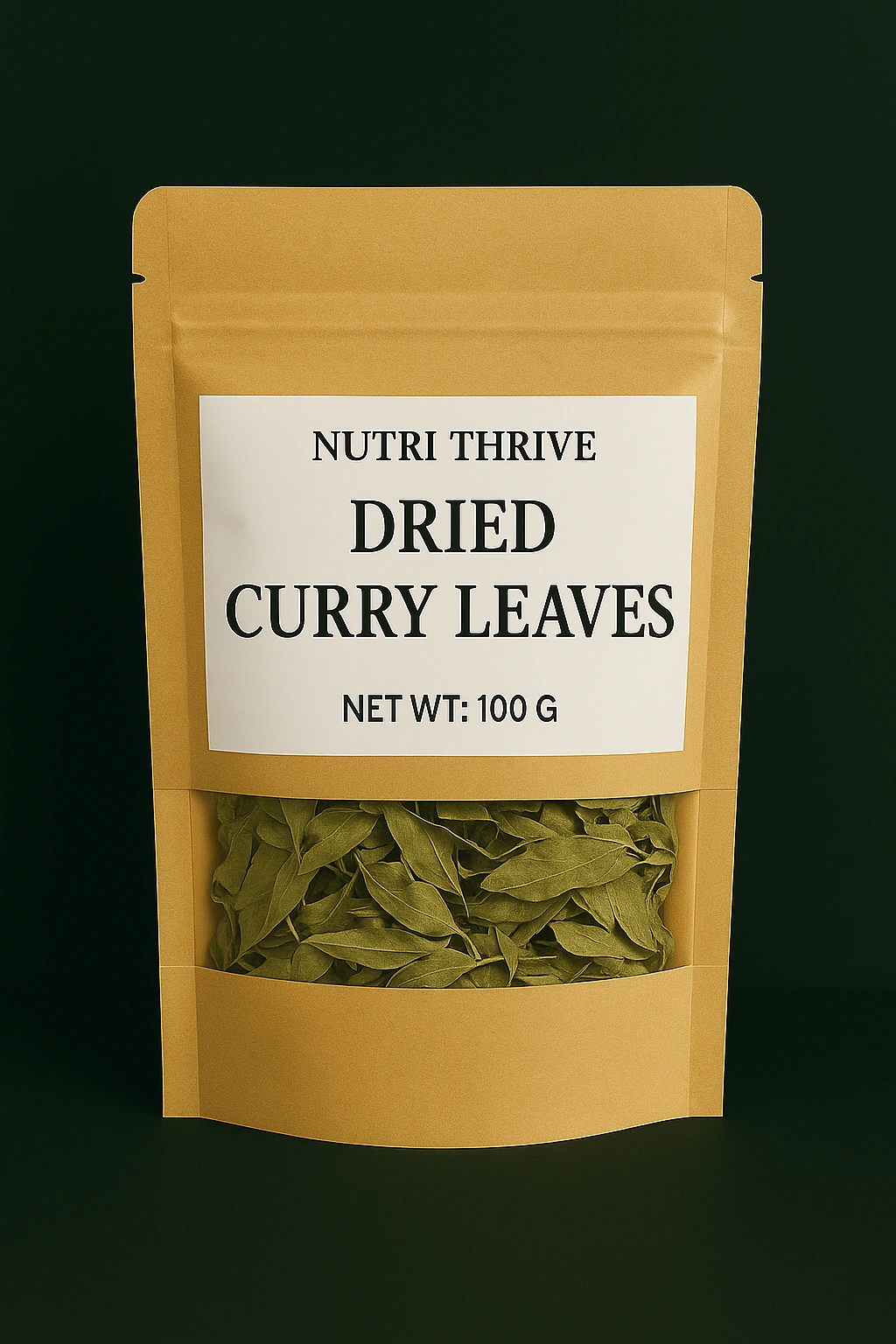
Cook with our dried curry leaves, free AU shipping over $79 when you mix with moringa powder or Darjeeling tea.
FAQ
Do curry leaves lower cholesterol?
Promising animal evidence, limited human studies. Not a proven treatment.
How to use them for cholesterol?
Regular cooking use (8-10 fresh leaves equivalent daily). Food-level amounts.
Good for the heart generally?
Yes. Antioxidants and anti-inflammatory compounds are relevant to cardiovascular health.
Written by Neer. NutriThrive Australia.
Shop Dried Curry Leaves → · Curry leaves health benefits → · Curry leaves tea →
These statements have not been evaluated by the TGA. Not intended to diagnose, treat, cure, or prevent any disease.
Shop Dried Curry Leaves
Shop our shade-dried curry leaves: packed fresh in Melbourne. Same-day dispatch.
Update log
- 29 Jun 2026: Article published.

A practical next step
Dried Curry Leaves
Farm-grown karipatta from our own farm.
$7.00 / 30g