 NutriThrive
Moringa Quality Checklist Australia | 8 Checks Before You Buy
8 checks before buying moringa powder in Australia: colour, smell, batch date, lab testing, single-ingredient labels. NMI-tested packs from Truganina.
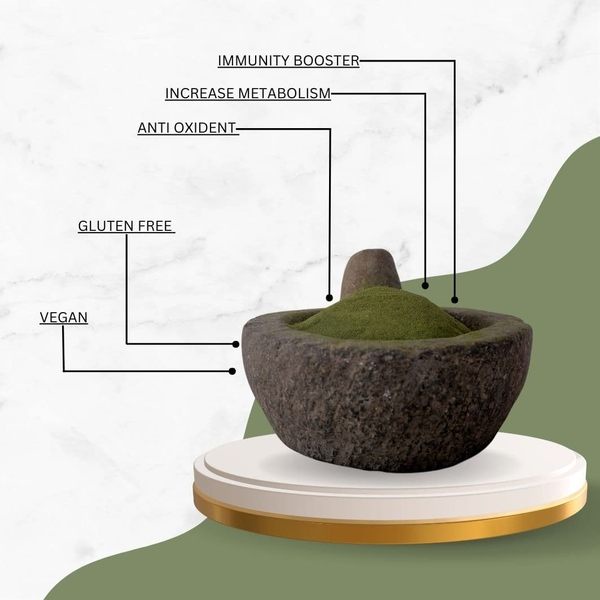
Before you buy moringa in Australia, ask for a current lab PDF, check the powder is bright green (shade-dried), smell it for fresh grassy notes, and confirm batch date and country of origin. Stale or sun-dried leaf looks dull and may clump badly in water.
I'm Neer (NutriThrive, Truganina). Before we sold a single bag, I wanted batch paperwork I could hand to a sceptical customer, NMI report, batch code, shade-dried leaf. "Lab-tested" on a label means nothing without the PDF.
Run every brand through this list, including ours. If they won't share current heavy-metal results, walk away. This is buyer education, not medical advice.
Australia's moringa shelf space grew fast, and so did vague "premium" labels. Some brands claim lab testing without a downloadable certificate; others charge extra for sun-bleached powder. If you want to compare lab-tested shade-dried powder with published batch summaries, start here. This eight-point checklist is how we judge incoming stock in our warehouse.
Before checkout: pair this page with our how to choose moringa powder in Australia guide to compare labels, format, and buy intent in one pass.
- Ask for the lab report (not just the claim)
- Check the colour of the powder
- Verify the batch date
- Do the smell test
- Confirm the drying method
- Check for additives and fillers
- Ask about the source country
- Test solubility in water
Why this checklist exists
Premium buyers research before they buy. You read labels. You look up ingredients. You probably searched "best moringa Australia" or "how to choose moringa powder" before landing on this page. You're the type of person who wants proof, not promises.
The moringa industry doesn't make this easy. Terminology like "lab-tested," "premium grade," and "organic" gets used liberally without consistent standards. One brand's "lab-tested" means a certificate they received five years ago. Another's "premium grade" means they use premium pricing, not premium quality.
This checklist lets you cut through that. Run any brand, including ours, through each check. The more they pass, the more you can trust them.
Check #1: Ask for the actual lab report
🔬 Lab report verification
What to ask: "Can I download your current batch lab certificate?" Not a summary. Not a screenshot. The full PDF from the testing laboratory, showing: laboratory name and accreditation, report number, batch code, test date, and individual results for protein, moisture, fat, additives, and contaminants.
Why it matters: "Lab-tested" is one of the most abused claims in the supplement industry. Without a verifiable certificate, you have no way to confirm the claim is current, accurate, or from a legitimate testing body.
What credible testing looks like: Testing by the National Measurement Institute (Australian Government), a NATA-accredited laboratory, or an internationally recognised third-party testing facility. The report should have a reference number you can look up.
NutriThrive's current certificate is Report No. RN1453596, tested by the National Measurement Institute, Batch NT042024, January 2025. Download it here →
Check #2: Colour
💚 Powder colour
What to look for: Open the bag and look at the colour in natural light. High-quality shade-dried moringa is bright, vivid green, the kind of green that makes you think "this is alive." It should look fresh.
Why it matters: Chlorophyll, the compound responsible for moringa's green colour, degrades under heat and UV exposure. Sun-dried moringa loses chlorophyll during processing. Old, improperly stored, or heat-treated moringa fades to olive, yellow-green, or brown. The colour is a reliable proxy for freshness and processing method.
The test: Place a teaspoon on a white plate. If it's bright green, good. If it's dull, brownish, or yellow-tinged, that's a sign of degradation.
Read the science behind shade vs sun drying →
Check #3: Batch dating
📅 Batch date transparency
What to look for: A specific packing date or batch code on the bag, not just a "best before" date. "Best before December 2027" tells you nothing about when the powder was actually packed. A batch code like "NT042024" or a pack date of "April 2024" does.
Why it matters: Moringa powder loses potency over time. Protein degrades. Vitamins oxidise. A bag packed 14 months ago and stored at room temperature has measurably less nutritional value than one packed last month. Without a pack date, you're guessing how old your powder is.
The rule: For maximum potency, you want moringa packed within the last 3 to 6 months. If you can't verify when it was packed, you can't assess freshness.
NutriThrive bags show the batch code and packing month on every label. How to read moringa batch codes →
Check #4: The smell test
👃 Aroma
What to look for: Open the bag and smell it immediately. Fresh, quality moringa has a distinctive earthy, green aroma, similar to freshly cut grass, spinach, or a mild peppery green. It's noticeable but not unpleasant.
Why it matters: Aroma compounds are volatile, they dissipate over time. Old moringa either smells musty (sign of moisture exposure or mould risk) or has almost no smell at all (sign of significant age). Either is a red flag.
What to watch for: Musty or sour smell = storage problem. No smell at all = very old stock. Strong chemical or "off" smell = possible contamination or adulteration.
Check #5: Processing method
☀️ Shade-dried vs sun-dried
What to ask: "Is your moringa shade-dried or sun-dried?" Some brands don't know. Some won't say. That itself is useful information.
Why it matters: Moringa is rich in heat-sensitive nutrients including vitamin C, several B vitamins, and chlorophyll. Direct sun exposure at temperatures above 40°C degrades these compounds during the drying process. Shade-drying takes longer and costs more, but preserves the nutritional profile that makes moringa worth taking in the first place.
The visual tell: Shade-dried moringa stays bright green (see Check #2). Sun-dried moringa fades. If the brand can't tell you, the colour of the powder is your most reliable indicator.
Check #6: Additives and fillers
🧪 Ingredient list and additive testing
What to look for: The ingredient list should say one thing: Moringa oleifera leaf powder. Nothing else. Any additional ingredient, anti-caking agents, maltodextrin, silica, "natural flavours," bulking agents, is a filler that dilutes the product you're paying for.
Why it matters: Fillers reduce the amount of actual moringa per serving without reducing the price. A product that's 80% moringa and 20% maltodextrin should cost 20% less. It rarely does. Even small amounts of additives can affect taste, mixability, and nutritional density.
The gold standard: A lab test specifically checking for adulterants and additives, not just macronutrients. NutriThrive's test showed 0% additives detected. That's the kind of verification that "no additives" on a label can't provide by itself.
Check #7: Source country
🌍 Origin transparency
What to ask: "Where is your moringa sourced from?" And specifically: "Is it Indian moringa, or from another country?"
Why it matters: Moringa quality varies significantly by origin. India, particularly regions like Andhra Pradesh, is the world's largest moringa producer and has well-developed quality controls, research, and commercial standards. Moringa from other regions may be excellent, but without disclosed origin you have no way to assess the supply chain.
What to watch for: Brands that won't disclose origin at all. If a company can't tell you where their moringa comes from, they likely don't know, which means their quality control stops at the import stage, not the farm.
Transparency note: NutriThrive sources moringa from established Indian suppliers with full traceability back to the processing facility. We disclose this when asked because we have nothing to hide about our supply chain.
Check #8: Solubility test
💧 Mix test in water
What to do: Add half a teaspoon of moringa to a glass of cold water and stir for 30 seconds. Observe how it behaves.
What good solubility looks like: The powder disperses throughout the water with stirring, creating a green-tinted liquid. Some settling after a few minutes is normal. The powder should not clump into hard balls, float as a dry film, or resist mixing.
Why it matters: Solubility reflects two things: milling fineness and purity. Finely milled pure moringa disperses well. Coarsely milled powder or powder with starch fillers clumps and resists mixing. Poor solubility is a practical inconvenience and a potential indicator of processing quality.
Practical tip: Mixing moringa into smoothies, juices, or warm water with a pinch of fat (e.g., a drop of coconut oil) improves dispersion and nutrient absorption.
Scoring your brand
| Check | NutriThrive | Typical retail brand |
|---|---|---|
| Lab report published? | ✅ Yes (Report RN1453596) | ❌ Usually not |
| Bright green colour? | ✅ Yes, vivid green | ⚠️ Varies widely |
| Batch-dated? | ✅ Every bag | ⚠️ Best-before only |
| Noticeable aroma? | ✅ Earthy-green, fresh | ⚠️ Often faint or absent |
| Shade-dried? | ✅ Yes, confirmed | ❓ Often undisclosed |
| 0% additives? | ✅ Lab verified | ❓ Label claim only |
| Origin disclosed? | ✅ India, traceable | ❓ Often not disclosed |
| Mixes smoothly? | ✅ Disperses well | ⚠️ Varies by product |
| Passes: | 8/8 | Typically 2 to 4/8 |
Ready to try verified-quality moringa?
You've done the research. You know what to look for. The checklist above applies to any brand, use it to hold every moringa supplier accountable, including us.
If you want moringa that passes all 8 checks, with published government lab results, shade-dried to preserve nutrients, batch-dated for freshness, and shipped same-day from Melbourne at $11/100g, that's exactly what we offer.
Shop moringa powder View Lab Report 🔬
Passed the checks? See how to use moringa powder daily and how to choose moringa powder in Australia.
Format choice: powder vs capsules.
Frequently asked questions
How do you verify moringa powder quality?
Run the eight checks on this page: lab report, colour, batch date, smell, drying method, ingredient purity, source origin, and mixability. If a brand cannot show evidence, keep comparing and Shop moringa powder when you find a verified fit.
What colour should quality moringa powder be?
High-quality shade-dried moringa powder is bright, vivid green. A dull olive or brown colour indicates the powder has been heat-processed (sun-dried), stored for too long, or exposed to moisture. The brighter the green, the fresher and better-preserved the nutrients.
How do I know if a moringa brand is really lab-tested?
Ask for the lab report, not a summary, but the actual certificate showing the testing laboratory's name, report number, batch code, and date. Credible labs include the National Measurement Institute (Australian Government), NATA-accredited laboratories, or internationally recognised third parties. If a brand says "lab-tested" but can't produce the certificate, treat the claim as unverified.
What does fresh moringa smell like?
Fresh, high-quality moringa has a distinct earthy, green smell, similar to freshly cut grass or spinach. Some people describe it as mildly peppery. If your moringa smells musty, sour, or has no discernible smell at all, it is likely old, improperly stored, or adulterated.
What's the difference between shade-dried and sun-dried moringa?
Shade-drying preserves heat-sensitive nutrients including vitamin C, chlorophyll, and certain B vitamins. Sun-drying is faster and cheaper but degrades these compounds through heat exposure. The visual tell is colour: shade-dried moringa stays bright green; sun-dried turns dull olive or brown.
Should moringa powder dissolve easily in water?
Quality moringa powder should mix reasonably well when stirred into water, smoothies, or juice. It won't dissolve like sugar, some settling is normal, but it should disperse without forming hard clumps or floating as a film. Coarse milling, fillers, or starch additions can cause clumping. See our guide on mixing moringa effectively →
Sources: National Measurement Institute (Australian Government) Report RN1453596 · Fuglie, L.J. (ed.), The Miracle Tree: Moringa oleifera · NutriThrive batch and product data (2026) · NIH Office of Dietary Supplements. This article is general information only, not personal medical or nutritional advice.

A practical next step
Moringa Powder
Grown on our farm, shade-dried and manufactured by NutriThrive. Tested in Australia and packed in Truganina. Same-day dispatch before 2pm, Monday to Friday.
$11.00 / 100g