 NutriThrive
First Flush vs Second Flush Darjeeling Tea
First flush or second flush Darjeeling, what's actually different, and which should you buy? A clear guide for Australians.
7 min read · Tea Guide
Darjeeling is often called the most distinctive black tea in the world: grown only in the Himalayan foothills of West Bengal, at altitudes that give it a lighter body and a muscatel flavour note no other tea region replicates. If you've only had it from a supermarket tea bag, you've probably had a blend, not the real thing, and the difference is significant enough that it's worth understanding before you buy.
What makes Darjeeling different from other black teas
Most black tea Australians drink day to day. English Breakfast, Assam, generic "black tea" blends: is grown at lower altitudes and processed for a bold, malty, milk-friendly cup. Darjeeling is grown between 600 and 2,000 metres in the Himalayan foothills, where cooler temperatures and slower leaf growth produce a lighter-bodied, more aromatic tea with naturally occurring fruity and floral notes rather than the heavy maltiness of Assam.
It's a genuinely small-production tea. Darjeeling accounts for roughly 1% of India's total tea output, compared to around half from Assam alone, which is part of why authentic Darjeeling costs more than a generic black tea blend, and why so much of what's sold as "Darjeeling" in supermarkets is actually a blend diluted with cheaper leaf from elsewhere.
First flush vs second flush, explained properly
This is the distinction that actually matters when buying Darjeeling, and it's the one most casual buyers have never heard of.
First flush is the spring harvest, picked roughly late February through April. The leaves are young and tender, producing a pale, bright liquor with a light body, floral aroma, and a slightly green, sometimes faintly astringent edge. First flush is prized by tea purists for its delicacy.
Second flush is the early summer harvest, roughly May through June. This is where Darjeeling's signature muscatel note: a flavour often compared to muscat grapes: develops most strongly. Second flush has a fuller body and a rounder, sweeter character than first flush, and it's generally the more approachable, food-friendly cup for people new to Darjeeling.
There's also an autumnal flush (October to November), darker and more full-bodied, less commonly available outside specialist tea sellers.
If you're buying your first Darjeeling, second flush is the safer starting point. It's closer to what most people expect from a "classic" Darjeeling cup, while first flush is more of an acquired-taste, lighter experience worth trying once you know you like the region's profile generally.
| First flush | Second flush | |
|---|---|---|
| Season | Spring (roughly late Feb, April) | Early summer (roughly May, June) |
| Flavour | Light, floral, bright; sometimes faintly astringent or green | Fuller, rounder; classic muscatel (grape-like) note |
| Caffeine tendency | Often slightly lighter lift; still real caffeine | Often a touch more body; steep time still matters most |
| Best for | Afternoon black cups; tea lovers who prefer delicate flavour | First-time Darjeeling buyers; food-friendly everyday cup |
| Price tendency | Often higher (prized by purists; smaller window) | Often more available; still premium vs generic black tea |
Caffeine content. What to actually expect
Darjeeling typically sits lower in caffeine than Assam or a standard English Breakfast blend, though it's not caffeine-free and shouldn't be treated as an evening tea if you're sensitive to it. Our loose-leaf Darjeeling runs about 40 to 50 mg per cup when brewed normally: a gentler lift than coffee for most people, but still a real amount.
Caffeine content varies meaningfully by flush, leaf grade, water temperature, and steep time: a longer steep or hotter water pulls more caffeine out of the same leaves. If caffeine timing matters to you, brewing a shorter steep (2 to 3 minutes rather than 4 to 5) is the simplest lever, more reliable than guessing based on flush alone.
How to brew it properly
Darjeeling is more delicate than most black teas and rewards a slightly gentler approach than you'd use for a builder's-strength Assam blend:
| Step | Guidance |
|---|---|
| Water | First flush: 85 to 90°C; fuller second flush: 90 to 95°C |
| Leaf amount | ~1 tsp loose leaf per cup |
| First flush steep | 2 to 3 minutes |
| Second flush steep | 3 to 4 minutes |
| Milk | Best black; second flush tolerates a splash better than first |
- Start first flush at 85 to 90°C; a fuller second flush may suit 90 to 95°C. Avoid a full rolling boil, which can pull out excess bitterness.
- Steep for 3 to 4 minutes for second flush, slightly shorter (2 to 3 minutes) for first flush, since the lighter leaves extract faster.
- Use roughly one teaspoon of loose leaf per cup, and resist the urge to oversteep "for strength". Darjeeling's character comes from aroma and complexity, not brute tannin strength.
On milk: most tea drinkers and Darjeeling estates themselves recommend drinking it black, particularly first flush, since milk mutes the floral and muscatel notes that are the entire point of the tea. If you genuinely prefer milk in your tea, second flush handles it better than first flush will, but it's worth trying a cup black at least once before deciding.
How to spot the real thing
Because Darjeeling is such a small percentage of global tea production, it's one of the more commonly diluted tea names in retail. A few signals worth checking before you buy:
- A legitimate Darjeeling seller will name the specific tea estate or garden, not just "Darjeeling region": estate names are part of how genuine Darjeeling is marketed and tracked.
- Be cautious of very cheap "Darjeeling blend" tea bags in supermarket aisles; "blend" often means a small percentage of actual Darjeeling leaf mixed with cheaper tea from elsewhere.
- Check whether the flush is specified (first, second, or autumnal): sellers who can't or don't specify this are often working from a generic bulk supply rather than a traceable harvest.
What NutriThrive sells (and why we specify first flush)
Our Darjeeling at a glance
Flush: First flush: spring harvest, lighter and more floral.
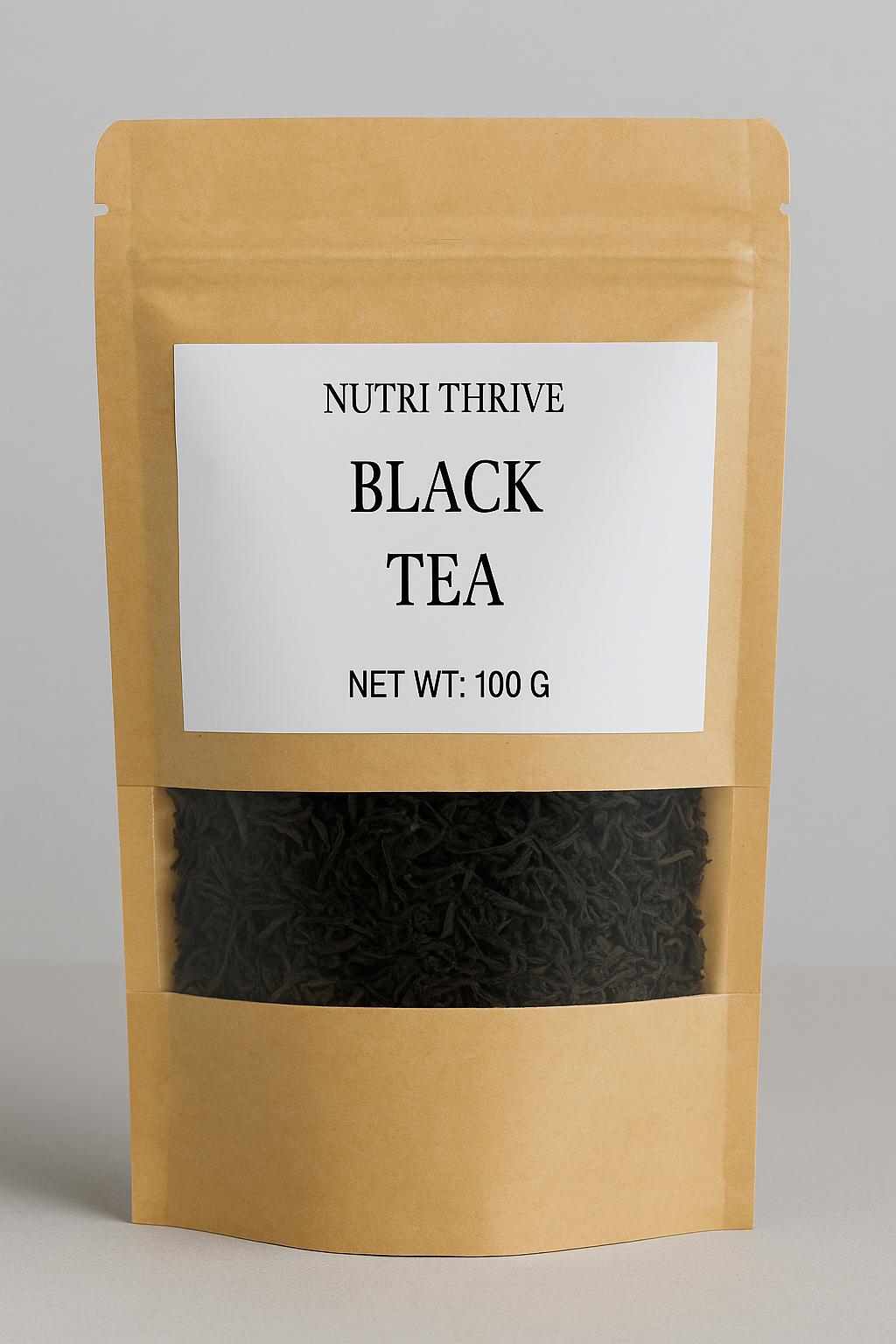
Format: Loose leaf, 100 g pack (~50 cups at 2 tsp per pot).
Origin: High-altitude Darjeeling gardens · packed fresh in Truganina, Melbourne.
Price: $7.50 · same-day Melbourne dispatch before 2pm · free AU shipping over $79.
We stock first-flush Darjeeling because it's the profile we prefer for afternoon cups: bright, aromatic, and smooth when brewed at 90°C rather than boiling. It's selected for muscatel aroma and a clean finish, not bulk-blended with Assam or Ceylon filler.
If you want a caffeine-free option on alternate days, pair it with our shade-dried moringa powder: see our moringa vs coffee guide for how Melbourne customers use both in rotation.
Cook with our dried curry leaves, free AU shipping over $79 when you mix with moringa powder or Darjeeling tea.
FAQ
What's the difference between first flush and second flush Darjeeling?
First flush is the spring harvest: lighter, brighter, more floral. Second flush is the early summer harvest, fuller-bodied with the classic muscatel grape note. Second flush is the more common starting point for new Darjeeling drinkers.
How much caffeine is in Darjeeling tea?
Generally less than Assam or English Breakfast, but still a real amount, not a decaf substitute. Steep time and water temperature affect this more than people expect. NutriThrive Darjeeling runs about 40 to 50 mg per cup under normal brewing.
Should you add milk to Darjeeling tea?
Most enthusiasts and producers recommend drinking it black, since milk mutes the floral and muscatel notes. Second flush tolerates milk better than first flush if you do prefer it that way.
How do I know if I'm buying real Darjeeling tea?
Look for a named tea estate, a specified flush, and be cautious of heavily discounted "Darjeeling blends": genuine Darjeeling is a small-production tea and rarely the cheapest option on the shelf.
Written by Neer. Founder, NutriThrive Australia. Neer runs sourcing, quality checks and fulfilment from the Truganina warehouse.
Shop Darjeeling Tea: $7.50 → · Read our curry leaves guide →
Contains naturally occurring caffeine. Not recommended in large quantities if pregnant, breastfeeding, or sensitive to caffeine: consult your GP if unsure.
First-flush Darjeeling: packed in Melbourne
NutriThrive loose-leaf Darjeeling: first flush, muscatel aroma, smooth finish. $7.50/100g. Same-day dispatch from Truganina before 2pm.
Shop Darjeeling tea →Guides in this cluster
These articles stay live on their own URLs. This page is the hub, start here, then dig into any topic below.
- How to Brew Darjeeling Tea Perfectly: Temperature, Time and Ratios (2026)
- Darjeeling Tea Health Benefits. What the Research Shows (2026)
- How Much Caffeine in Darjeeling Tea? Compared to Coffee and Green Tea
- Darjeeling Tea vs English Breakfast. What Is Actually Different? (2026)
- Can You Drink Darjeeling Tea Every Day? Benefits and Limits (2026)
- Darjeeling as a coffee replacement: caffeine compared
- Darjeeling Chai Latte Recipe: The Winter Coffee Alternative (2026)
- Shop related product
Last updated: 21 June 2026
Update history
- June 2026: Initial publication. First flush vs second flush Darjeeling buying guide for Australian customers.

A practical next step
Darjeeling Black Tea
From a Darjeeling family farm.
$7.50 / 100g