 NutriThrive
Darjeeling Tea Health Benefits: The Research
Darjeeling tea's real health benefits, backed by research, antioxidants, heart health, and how it compares to green tea.
Quick Answer
Darjeeling is a type of black tea, made from Camellia sinensis. Like other black teas, it contains polyphenols, including theaflavins and thearubigins. Research on tea and black tea has looked at cardiovascular, metabolic and other health outcomes, but much of that work is observational, or it studies black tea in general rather than Darjeeling as a distinct tea. There is limited evidence that Darjeeling itself has unique health effects compared with other black teas.
Many pages treat generic black-tea findings as if they were proven for Darjeeling. This article separates three layers: research on Darjeeling specifically, research on black tea generally, and research on tea more broadly. The last two should not be read as proof of a special Darjeeling effect.
Polyphenols in black tea
Black tea is made by oxidising tea leaves. That process produces polyphenols such as theaflavins and thearubigins, which are characteristic of black tea generally, not of Darjeeling alone. Lab work has studied these compounds for antioxidant activity. That chemistry is real, and it is shared with other black teas. It does not mean Darjeeling is uniquely superior, and it does not by itself prove clinical health outcomes from drinking a particular cup.
What black-tea research has looked at
Population studies of regular black-tea drinking have reported associations with cardiovascular markers, including LDL cholesterol in some datasets. Those findings are correlational: they do not prove that tea caused the difference, and they were not designed around Darjeeling specifically. Reviews of tea more generally have also examined metabolic and other outcomes. Again, that is not Darjeeling-specific evidence.
Some black-tea research has also looked at the gut microbiome. Any such findings, if they hold, would apply to black tea as a category unless a study names Darjeeling. We do not have a strong basis to say Darjeeling does something extra here.
Caffeine
Yes, Darjeeling contains caffeine because it is made from Camellia sinensis. Amounts vary with leaf grade, serving size and brew time, so this page does not quote a hard milligram figure. For amounts and a comparison with coffee and green tea, see how much caffeine is in Darjeeling tea.
Sleep and drinking it at night
Darjeeling is not a sleep aid. It contains caffeine, and caffeine can interfere with sleep for some people. Sensitivity varies: some people drink black tea in the evening with little trouble; others sleep worse. If you are trying to protect sleep, treat Darjeeling like other caffeinated teas rather than as a bedtime drink. For amounts and when to drink it, see caffeine in Darjeeling vs coffee and green tea.
How often to drink it, and notes on tannins and iron, belong in a daily-use guide rather than here. See can you drink Darjeeling tea every day. For brewing, see how to brew Darjeeling tea.
Cook with our dried curry leaves, free AU shipping over $79 when you mix with moringa powder or Darjeeling tea.
FAQ
What are the benefits of Darjeeling tea?
Darjeeling is black tea, so it supplies the same class of polyphenols found in other black teas, plus caffeine. Research that people often cite for “benefits” is mostly about black tea or tea in general, and much of it is observational. It does not show that Darjeeling uniquely improves health compared with other black teas.
Does Darjeeling tea have caffeine?
Yes. It is made from Camellia sinensis, so it contains caffeine. For amounts versus coffee and green tea, see the caffeine comparison.
Does Darjeeling tea help with sleep?
No. Caffeine can interfere with sleep for some people, so Darjeeling should not be treated as a sleep aid.
Is Darjeeling tea good to drink at night?
Not if caffeine keeps you awake. Individual sensitivity varies. If sleep is the goal, leave a cutoff before bed; see caffeine in Darjeeling and drinking it before bed.
Is Darjeeling healthier than other black tea?
Not on the evidence we can responsibly cite. Flavour, origin and flush differ. Unique health superiority over other black teas is not established.
Written by Neer, Founder, NutriThrive Australia.
Looking for loose-leaf Darjeeling tea?
Packed in Melbourne from a Darjeeling family farm.
Update log
- 31 Aug 2026: Tightened evidence language; removed unsourced Darjeeling-specific claims; added caffeine and sleep FAQs.
- 27 Jun 2026: Article created (staged for weekly publishing).

A practical next step
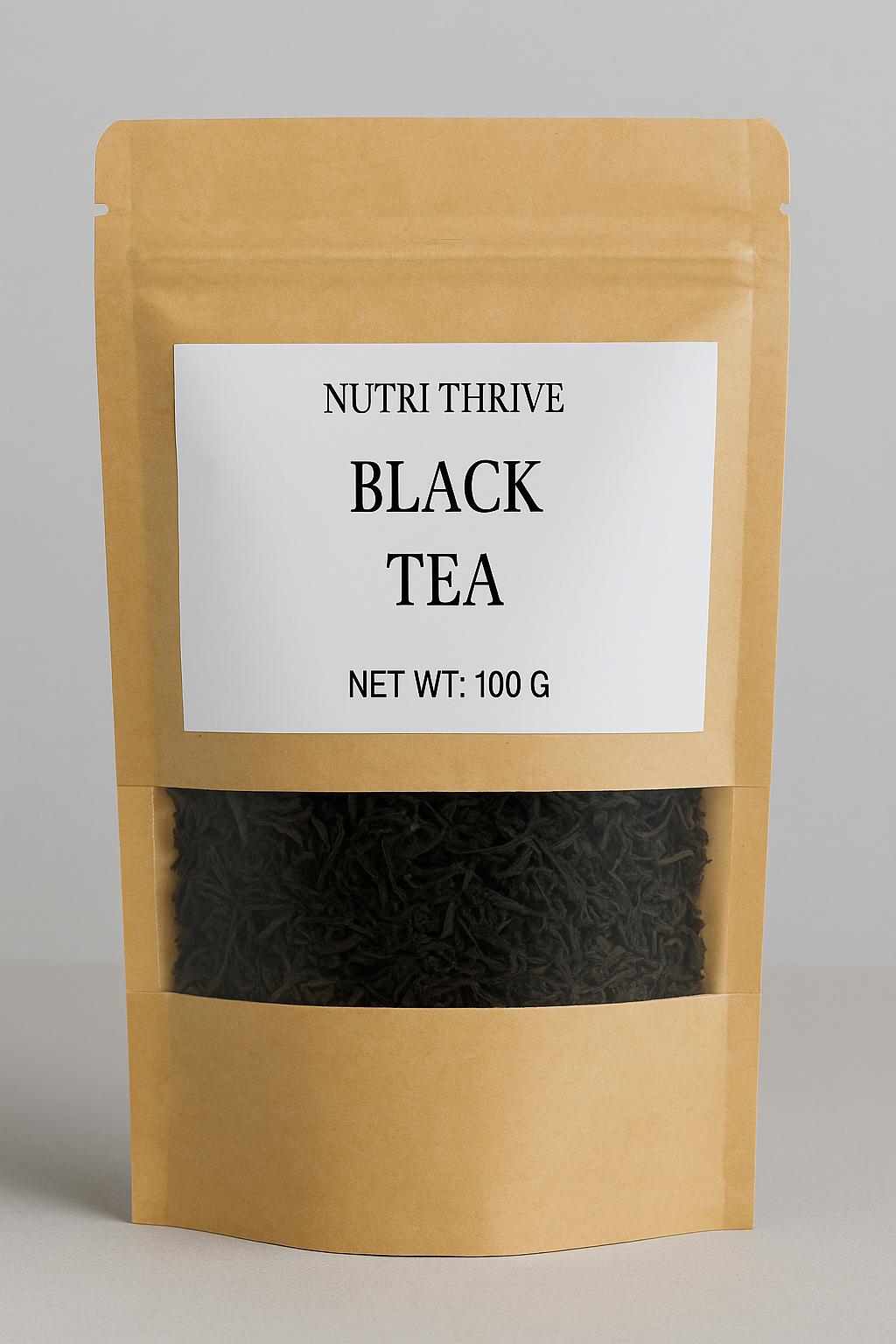
Darjeeling Black Tea
From a Darjeeling family farm.
$7.50 / 100g