 NutriThrive
Best Time to Take Moringa Powder in Australia: Morning, Empty Stomach or With Food?
Short answer
Morning with breakfast can be a convenient time to use moringa leaf powder as food. It is a routine suggestion, not a proven way to get better results. There is no established medical dose or proven best time of day.
Follow the food label. If you use a small amount in a meal, adjust for taste rather than following a compulsory dose-escalation plan. Teaspoon weights vary. A measured 2g costs $0.22 from an $11/100g pouch and gives 50 portions; 3g costs $0.33 and gives about 33 portions.
Moringa does not treat tiredness, iron deficiency or another health condition. Ask your GP or pharmacist before regular use if pregnant, breastfeeding, taking medication or managing a health condition.
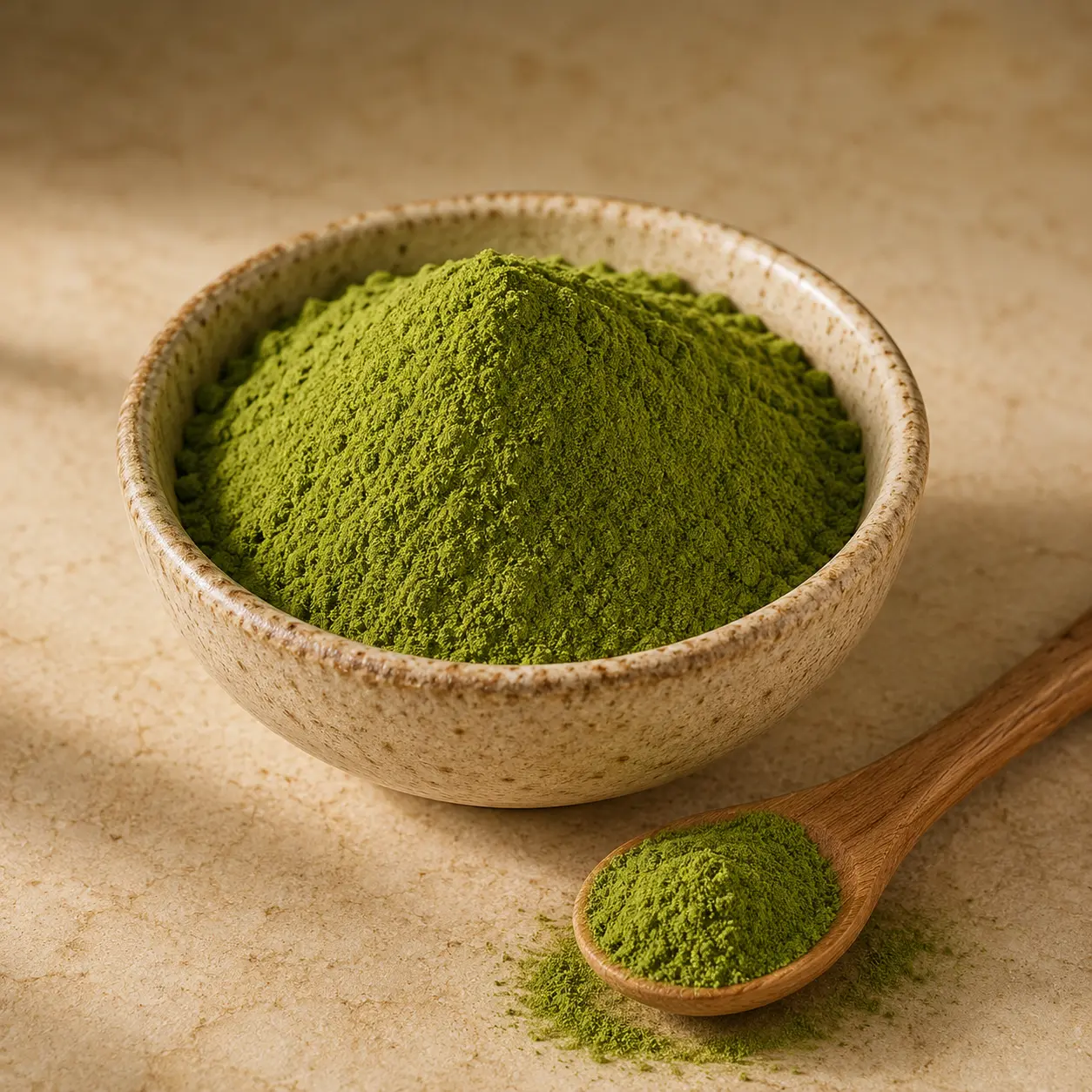
Morning vs night vs with food
| Option | Best for | Watch out for |
|---|---|---|
| Morning with breakfast | Most people; easiest habit to keep | Rushed mornings — tie it to food, not to a drink you rush |
| Morning, empty stomach | People who like a quick serve in water | Start small; a sensitive stomach may not like it |
| With food, any time | Sensitive stomachs; people who dislike the taste | Do not boil it for a long time |
| Night with dinner | People with rushed mornings | Some people do not like a green drink late in the day |
| Split across two meals | People who prefer a smaller serve twice a day | Harder to remember; keep it simple if you forget often |
There is no winner in that table for everyone. The best row is the one you will repeat every day.
Why morning works for most people
Morning wins for one simple reason: you remember it.
An easy-to-remember routine can be more practical than trying to choose an exact hour. Put it in the same place every morning, next to the breakfast things, and it becomes part of the routine.
Morning also suits the way most Australians use it. Stir it into a smoothie, mix it into yoghurt, or blend it into porridge, and you do not have to think about it again for the rest of the day.
Morning vs night: which is better?
There is no evidence that moringa powder works better in the morning than at night. The difference is practical, not chemical.
Morning is better if you want a routine you will stick to. Night is better if mornings are rushed and you have more time after dinner. A small serve every day beats a perfect serve once a week.
If you are trying moringa for the first time, start in the morning. That way, if your stomach feels a bit off, you will notice it during the day.
Empty stomach or with food?
This is the question most people worry about, and the answer is simple: there is no established timing advantage. Having it in a meal may make the taste and texture easier to manage.
On an empty stomach
Some people take moringa powder in water first thing, before breakfast. If that suits you, start small. A 1/4 teaspoon in a glass of water is enough to test how your stomach feels.
With food
With food is a practical option. If moringa causes stomach symptoms, stop using it rather than assuming a different time will make it suitable. Mix it into a smoothie, yoghurt, or porridge, or add it to soup after cooking. Moringa has a green, earthy taste, and many people find it much easier mixed into food. If taste is putting you off, read our honest guide to what moringa powder tastes like.
Before or after exercise?
Moringa powder is not a pre-workout and it is not a protein powder. Do not treat it like one. There is no established moringa-specific window before or after exercise. Choose a meal that fits your day; do not expect a performance effect.
For a full guide to how much to take each day, see how much moringa powder per day in Australia.
With vitamin C for iron
Moringa contains iron, and vitamin C helps your body absorb iron from plant foods. Have your moringa with something that contains vitamin C, such as a smoothie with orange, mango, or berries, or yoghurt with fruit on top. Vitamin C foods can be included in ordinary meals; follow your clinician’s advice if you have a diagnosed deficiency.
If you want the full picture on iron, including how much iron is in a teaspoon of moringa and why it is not a replacement for iron tablets or medical care, read moringa powder for iron deficiency in Australia. If you have low iron or low ferritin, talk to your GP and get a blood test first.
What to avoid mixing with at the same time
There is no long list of things you must avoid. There are just two practical points.
First, tea and coffee at the exact same time. Tea and coffee contain compounds that can reduce how much iron your body absorbs from plant foods when they are taken together. If iron is the reason you are taking moringa, avoid having tea or coffee with an iron-focused meal, and follow your clinician’s advice on iron treatment. See our guide to moringa vs coffee for more on the two habits.
Second, boiling water. Do not cook moringa powder at a high heat for a long time. Stir it into food after cooking, or mix it into a warm drink that is not boiling.
Everything else is simple. You can mix moringa into smoothies, yoghurt, porridge, soups, and salad dressings, once a day or split across two meals.
What the evidence actually says
Here is the honest version, because most blogs on this topic overstate it.
There is no good human study that proves one time of day is better than another for moringa powder. The reviews linked below do not establish a best time of day or an empty-stomach advantage. If a blog tells you that 7am is the scientifically proven best time, it is guessing.
What we do know is more general, and it comes from nutrition, not from a moringa timing study: iron from plant foods is absorbed better with vitamin C, and less well when tea or coffee is taken at the same time; small, regular serves are easier to stick to than large, occasional serves; and starting small is gentler on the stomach than jumping straight to a large serve.
Moringa itself has been studied in small human trials, mostly at serves of a few grams a day, but those trials were short, small, and not designed to answer timing questions. They do not prove benefits for energy, immunity, or any specific condition, and this blog does not claim that they do.
So the honest limit is this: timing is a habit question, not a science question. Pick a time you will keep, take it with food if your stomach is sensitive, pair it with vitamin C foods if iron matters to you, and leave a gap after tea and coffee. That is as far as the evidence goes. Moringa is a green leaf food, rich in iron, vitamin A, and other nutrients, and that is enough.
A simple first-week routine
Choose one meal you already prepare, such as breakfast. Keep the pouch sealed in a dry cupboard near your breakfast ingredients. Mix a small culinary amount into food if the label and your health circumstances allow it.
You do not need to increase the amount on a fixed day. Keep the amount low enough that you enjoy the meal. Stop if it makes you unwell. If you miss a day, there is no need to make it up or double the next amount.
For cost comparisons, weigh the powder rather than assigning a fixed gram weight to every teaspoon: 2g costs $0.22, while 3g costs $0.33 at $11 per 100g.
Real mistakes people make
1. Starting with a tablespoon on day one. This is the most common mistake. A large amount can taste unpleasant and may cause stomach upset. Start at 1/4 teaspoon.
2. Taking it in water on an empty stomach, then blaming the powder. For some people that is fine. For others it is not. If it causes symptoms, stop using it and seek advice if symptoms persist or are severe.
3. Hiding it at the back of the pantry. Out of sight means out of mind. Keep it where you make breakfast.
4. Chasing the perfect time. People spend a week researching the best time, then never start. Morning with breakfast is good enough. Start there.
5. Expecting a result in three days. Moringa is food, not a quick fix. Judge the habit after a month, not after a weekend.
6. Buying a huge pouch first. If you have never tried moringa, start with 100g for $11. The 200g pouch is $22 and the 400g pouch is $40, which is $10 per 100g and the best value — but only once you know you will keep going. The 400g pouch is the best value for regular use, not for a first try.
7. Boiling it or baking it for a long time. Stir it in after cooking. It is a leaf powder, not an ingredient that needs long cooking.
Consistency over timing
Like any food you eat regularly, it is the habit over weeks and months that counts. Pick one time, tie it to something you already do every day, and stick to it for at least a month. Use the same spoon every day, and do not double up if you miss a day.
If you want to compare powder with capsules before you commit, read moringa capsules vs powder. If you want to see how NutriThrive compares on price per 100g with other brands, read best moringa powder in Australia. And if you are wondering where else you can buy moringa in Australia, see where to buy moringa powder in Australia.
How to store it so it lasts
Keep the pouch sealed, in a cool, dry place, away from direct sun. Use a dry spoon every time. Moringa powder lasts about a year once opened if it is stored properly. For the full storage guide, see how long does moringa powder last.
FAQ
What is the best time of day to take moringa powder?
Morning with breakfast is a convenient routine for some people; it is not a proven best time. Night works just as well if that suits your routine better. Consistency matters more than the exact time.
Should I take moringa powder on an empty stomach?
There is no established empty-stomach advantage. Food can make the flavour and texture easier to manage. Stop using it if symptoms occur; do not assume a different timing makes it suitable.
Can I take moringa powder at night?
Yes. There is no rule against taking moringa at night. Some people prefer it with dinner. If you find it does not suit you late in the evening, switch to the morning.
How much does moringa powder cost per day?
At a measured 2g a day, the powder costs $0.22 and 100g lasts 50 days. At 3g, it costs $0.33 and lasts about 33 days. Spoon weights vary. Prices are $11/100g, $22/200g and $40/400g; free AU shipping from $49.
Try it for a month
The best time to take moringa powder is the time you will actually take it every day. For most people, that is morning with breakfast, with food, and at a small serve that builds up over a few weeks.
If you want to try that routine, start with a 100g pouch. It is $11, it provides about 33 measured 3g portions, and it is enough to find out whether the habit suits you.