 NutriThrive
How to Read a Soap Ingredient Label
What's actually in your soap? A simple guide to reading ingredient labels and spotting what to avoid. Practical Australian guidance from NutriThrive.
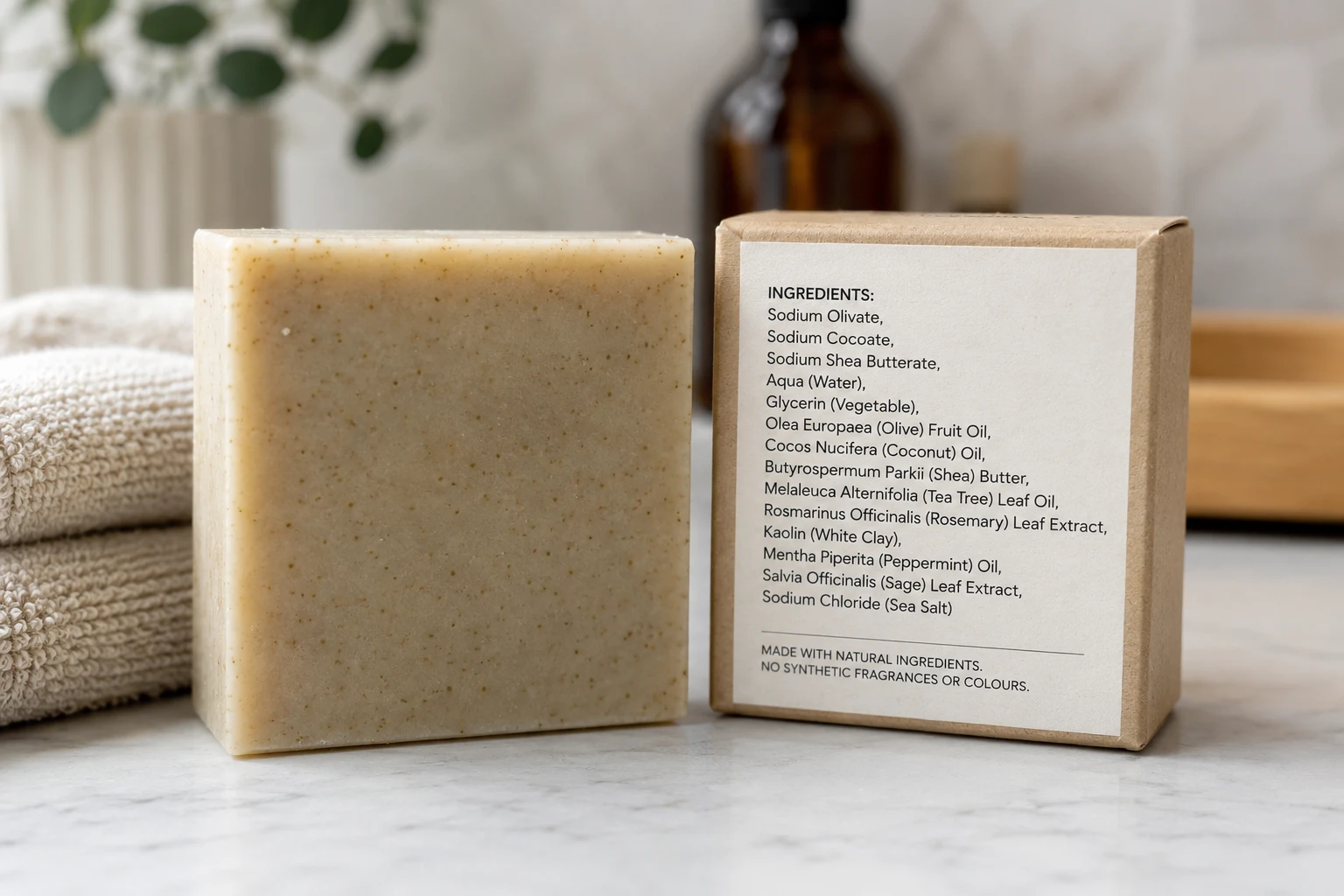
Quick Answer
Most soap ingredient lists use INCI names, not marketing language. Read the first 3–4 ingredients (they’re most of the bar), treat “natural” as a claim unless you see a real certification, and prefer a short, recognisable list over front-of-pack buzzwords.
- Ingredient lists are ordered by quantity, highest first — the first 3–4 ingredients are what the bar mostly is.
- “Natural” and “organic” aren’t strictly regulated terms on soap packaging in Australia — the ingredient list is the only reliable source.
- A short, recognisable ingredient list is generally a better sign than a long one, regardless of brand.
Most soap ingredient lists are written in INCI names (International Nomenclature of Cosmetic Ingredients) — the scientific naming system, not marketing language. “Sodium Tallowate” is just soap made from beef fat. It looks scarier than it is. Here’s how to actually read one, on any bar, from any brand.
Start with the first three ingredients
Ingredients are legally required to be listed in descending order by weight. So whatever’s listed first is what the bar is mostly made of. On most soap, that’s some combination of:
- Sodium Tallowate / Sodium Palmate / Sodium Cocoate — these are just the fat or oil (tallow, palm, coconut) after it’s been through saponification (the chemical process that turns oil + lye into soap). This is completely normal and is what soap is.
- Water (Aqua)
- Glycerin — a natural byproduct of soap-making that’s actually good for skin; some commercial soap makers strip it out and sell it separately, which is why some bars feel more drying than others.
What “natural” actually means on a label (and what it doesn’t)
In Australia, cosmetic and soap labelling isn’t as tightly regulated around the word “natural” as people assume — there’s no single legal standard a brand must meet to use it. That means “natural” on a label is a marketing claim, not a certification, unless the product also carries a specific third-party certification logo. The ingredient list is the only part of the packaging that’s reliably factual.
Ingredients worth knowing (not necessarily avoiding)
| Ingredient | What it is | Worth knowing |
|---|---|---|
| Sodium Laureth Sulfate (SLES) | Foaming agent | Common in liquid body wash, not usually in bar soap |
| Fragrance / Parfum | Scent blend | Can be a single word covering dozens of undisclosed compounds — a common cause of skin sensitivity |
| Titanium Dioxide | Whitening agent | Cosmetic-only use is considered safe; mainly relevant if you’re avoiding it for personal reasons |
| Plant/botanical extracts (e.g. Moringa Oleifera Leaf Extract) | Added plant ingredient | Usually appears lower on the list since it’s a smaller-quantity addition, not the base of the bar |
None of these are automatically “bad” — the point of reading a label is knowing what you’re buying, not being afraid of it.
A simple 30-second check next time you’re shopping
- Flip the bar over
- Read the first three ingredients — that’s what the bar mostly is
- Look for “Fragrance” or “Parfum” if you have sensitive skin — that’s the most common irritant
- Ignore the front-of-pack marketing words entirely; they’re not regulated the same way the ingredient list is
For what it’s worth, our own moringa soap keeps the list short — base oils, moringa leaf, and not much else — which is exactly the kind of label this guide is describing you look for, on any brand. See the moringa soap ingredient list →
FAQ
Is a shorter ingredient list always better?
Generally, yes — for soap, a shorter list usually means fewer additives, though it’s not an absolute rule. Some longer lists include several beneficial plant oils, which isn’t a bad thing either. Read it, don’t just count it.
Does “sulfate-free” matter for bar soap?
Sulfates (like SLES) are mostly found in liquid body wash and shampoo, not traditional bar soap, so this label is less relevant when comparing bars.
What does “saponified” mean on a label?
It means the oils have gone through the chemical reaction with lye that turns them into soap — this is simply how all traditional soap is made, not a red flag.
Are natural soap ingredients automatically better for sensitive skin?
Not automatically — fragrance (natural or synthetic) is the most common irritant regardless of whether a product is marketed as “natural.”
Written by Neer. NutriThrive Australia.
General consumer information, not medical or dermatological advice. If you have a skin condition, check with your GP or dermatologist before switching products.
Further reading: Moringa soap product page · Handmade moringa soap: how it’s made · ACCC — cosmetic labelling claims (external)
Shop Moringa Soap
Shop our handmade moringa soap: short ingredient list, packed in Melbourne. Same-day dispatch.
Update log
- 9 Aug 2026: Article published.

A practical next step
Moringa Soap
Handmade by us in Australia.
$7.00 / 95g