 NutriThrive
Moringa Tablets vs Powder Australia: Price Per 100g Compared
Short answer
If you want the most moringa leaf for your money, powder wins. If you want the easiest option with no taste and no measuring, tablets win.
NutriThrive moringa powder is $11 for 100g, $22 for 200g, and $40 for 400g — $0.11 per gram, or $10 per 100g in the 400g pouch. Free AU shipping from $49.
For a hypothetical tablet containing 500mg of plain leaf, 60 tablets provide 30g. This calculation does not apply to an extract tablet. Compare grams of leaf with grams of leaf, not a bottle with a pouch.
Moringa is food, not medicine — not a treatment or a cure for anything. If you are pregnant, breastfeeding, taking medication, or unsure, ask your GP first.
What moringa tablets actually contain
Moringa tablets can contain pressed leaf powder or concentrated extracts. These are different preparations. Some are just leaf powder pressed together; others add binders or fillers to hold the shape, so check the label.
First identify whether the label states actual leaf powder or extract. Use the stated weight for that preparation; do not treat a fresh-leaf equivalent as grams of dry leaf powder. The label should also tell you how many tablets are in the bottle, and how many to take a day. They are also called moringa pills and moringa leaf tablets — a swallowable format, but ingredients and strengths vary.
Capsules are close to tablets, but not the same: a capsule has a shell, while a tablet is compressed. Either can contain an extract, so read the ingredients. For the capsule version, read Moringa Capsules vs Powder: Which Is Better? and Best Moringa Capsules in Australia 2026.
What moringa powder actually is
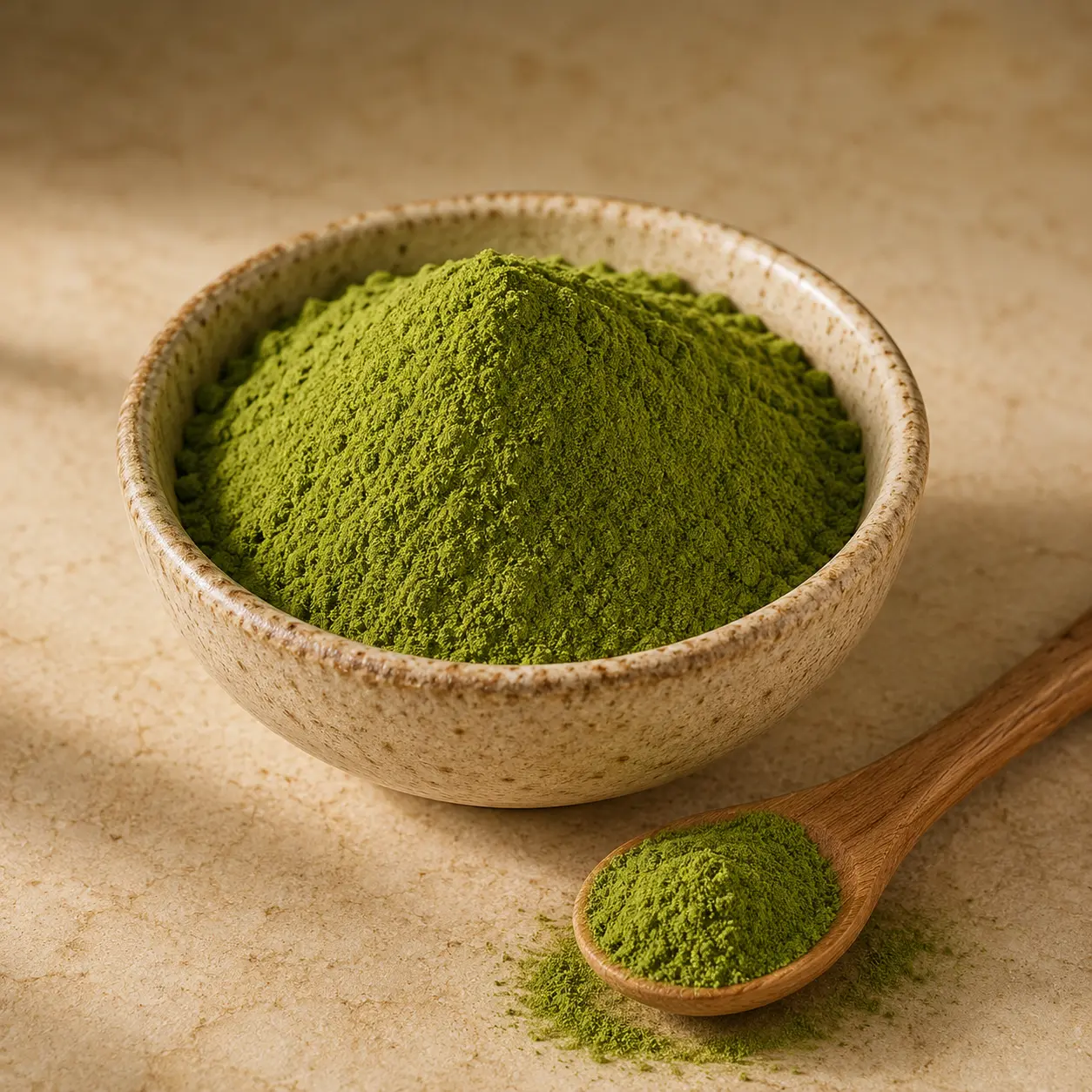
Moringa powder is dried moringa leaf, ground fine. NutriThrive powder is 100% leaf, no fillers, farm-grown, sun-dried, packed in Truganina, Melbourne, and covered by an NMI nutrition-panel lab summary in Australia. It is not certified organic, and the site says that honestly.
You mix powder into food or drink — a smoothie, yoghurt, soup, or water. The taste is green and earthy. You can change the amount easily: a pinch one day, a full teaspoon the next. Tablets offer less flexibility; follow the label rather than dividing tablets unless the label or pharmacist permits it. Powder also keeps well stored sealed, cool, and dry, away from light — see How Long Does Moringa Powder Last?.
The honest maths: price per gram
Most comparisons go wrong here. They compare a $14 bottle with an $11 pouch, and the bottle looks cheaper — until you count the leaf inside.
Powder:
- NutriThrive powder: $11 for 100g
- $11 divided by 100g = $0.11 per gram
- 200g is $22, also $0.11 per gram
- 400g is $40, which is $10 per 100g, or $0.10 per gram
Tablets at 500mg each:
- 1 tablet = 500mg = 0.5g of leaf
- 60 tablets = 60 x 0.5g = 30g of leaf
- To get 100g of leaf from 500mg tablets, you would need 200 tablets
At the powder price, 30g of leaf costs $3.30. So if a bottle of 60 tablets costs more than $3.30, you are paying more per gram than powder. Most tablet bottles cost well above that.
That does not make tablets bad. It makes them a convenience product. You pay extra for the form, the measuring already done, and no taste — a fair trade for some people, but one you should see clearly before you buy.
Full price-per-gram comparison table
The capsule figures below are real examples already used on this site, checked 9 November 2026.
| Form | Leaf per unit | Leaf in a typical pack | Price per gram of leaf |
|---|---|---|---|
| NutriThrive powder, 100g | — | 100g | $0.11 per gram |
| NutriThrive powder, 400g | — | 400g | $0.10 per gram |
| Example tablet bottle, 60 x 500mg | 0.5g per tablet | 30g | Powder price for 30g is $3.30 |
| Chemist Warehouse Forest Super Foods capsules | Varies by capsule | See label | About $132 per 100g, or $1.32 per gram |
| Rosabella moringa | Varies by serve | See label | About $217 per 100g, or $2.17 per gram |
Read the table from the leaf, not the pack price. A bottle holding 60 hypothetical 500mg leaf tablets contains 30g; that is an arithmetic example, not the contents of the $14.39 Caruso’s extract product. An $11 pouch looks dear until you see it holds 100g.
One verified tablet price: Caruso's Moringa 7000 tablets were $14.39 at Chemist Warehouse, checked 9 November 2026 — the bottle price on that date, and prices change. It contains 30 tablets, each with 1g dry leaf extract from 7g fresh leaf. Those figures do not establish the equivalent weight of dry whole-leaf powder, so we do not calculate a price per 100g of plain leaf for it.
To see how NutriThrive compares with the big chemist brands, read Moringa Powder Chemist Warehouse vs NutriThrive $11 and Best Moringa Powder Australia 2026.
Daily use: follow the specific product label
There is no established medical dose of moringa leaf powder. Tablet and capsule directions vary by product and preparation; do not substitute a generic one-or-two-tablet schedule. Extract strength is especially important.
For powder, teaspoon weights vary with grind and how the spoon is filled. Use scales if you need grams. At a measured 2g, a 100g pouch gives 50 portions; at 3g, about 33 portions. These are pack-size calculations, not daily intake recommendations.
See how much moringa powder per day in Australia. Check with a GP or pharmacist before regular use if you take medication, are pregnant or breastfeeding, or have a health condition. Do not use moringa to treat low iron; see our iron deficiency guide.
Taste
Tablets have almost no taste. You swallow them with water and you are done. If you dislike green, earthy flavours, tablets solve that problem completely.
Powder tastes green. In a smoothie or soup, many people barely notice it; in water, some do not enjoy it.
If taste would stop you using moringa at all, tablets are better. A product you actually take beats a cheaper one that sits in the cupboard. But if you can handle the taste in food, powder gives you far more leaf for the same money.
Travel and everyday use
Tablets win on travel. A small bottle fits in a bag, needs no spoon, no mixing, and no fridge — at work, on a plane, or on a weekend away.
Powder is harder to travel with: you need a container, a spoon, and something to mix it into.
At home, powder is easier — keep the pouch in the kitchen and add a spoon to breakfast or lunch. If you travel a lot, tablets may suit you better; if you mostly eat at home, powder is simpler and cheaper.
Who should pick which?
Answer honestly, and the right form usually picks itself.
Pick tablets if you answer yes to most of these:
- Do you hate green, earthy tastes?
- Do you want a set dose with no measuring?
- Do you travel often, or take moringa at work?
- Do you only want a small daily amount?
- Have you tried powder before and stopped because of the taste or the fuss?
Do not increase tablet intake to match a spoonful of powder. Follow the tablet label and ask a pharmacist about extract products.
Pick powder if you answer yes to most of these:
- Do you want the most leaf for your money?
- Are you happy to mix it into a smoothie, yoghurt, soup, or curry?
- Do you want to change the amount day by day?
- Do you use moringa in cooking, not just as a daily dose?
- Does more than one person in your house use it?
Powder is also better for a household: one pouch can be shared, while a bottle of tablets is one person's supply.
Pick both if this sounds like you: if considering powder at home and tablets for travel, first check whether they contain plain leaf or extract. Check each product label and suitability before combining formats.
Still not sure? Do this test: buy the $11 for 100g pouch first. It is the cheapest way to try moringa properly, and 100g lasts a month or more at a daily teaspoon. If you use it daily for two weeks and like it, powder is your form. If the taste or mixing puts you off, switch to tablets.
If you are still weighing where to buy from, Where to Buy Moringa Powder in Australia covers Coles, Chemist Warehouse, and buying direct.
How to switch from tablets to powder
Check both ingredient lists before switching. A plain-leaf product and an extract are different preparations; they cannot be swapped by teaspoon or tablet count.
For two hypothetical tablets containing 500mg of actual plain leaf each, the leaf weight totals 1g. This is arithmetic, not a dose or switching recommendation. For an extract, ask a pharmacist; do not use a fresh-leaf equivalent to calculate a whole-powder dose. Spoon weight varies, so use scales if you need grams.
If you are switching the other way, read the tablet label carefully: how many milligrams per tablet, and how many a day. Compare that with the powder amount you were using, so you know whether you are taking more or less leaf.
Tablets vs powder: the quick comparison
| Tablets | Powder | |
|---|---|---|
| Leaf per serve | Set, e.g. 0.5g per 500mg tablet | Culinary amount according to label |
| Price per gram | Higher, you pay for the form | Lower, $0.11 per gram |
| Taste | Almost none | Green and earthy |
| Measuring | None, already done | Spoon, easy but you do it |
| Travel | Very easy | Harder, needs a container |
| Dose flexibility | Low | High |
| Best for | Taste, travel, routine | Value, cooking, sharing |
FAQ
Are moringa tablets as good as moringa powder?
Plain-leaf tablets and powder may contain similar leaf material, but extract tablets are different. Compare the actual label, ingredients, preparation and delivered cost. Some tablets are listed complementary medicines; do not self-treat a condition with either format.
How many tablets equal a teaspoon of powder?
Teaspoon weights vary. A measured 2g of plain powder equals the leaf weight in four hypothetical 500mg plain-leaf tablets; 3g equals six. This does not apply to extracts and is not a recommendation to take that many tablets. Follow the specific product directions.
Do tablets work faster than powder?
No. There is no established evidence that a tablet delivers a faster benefit than plain powder. Different extracts and formulations are not interchangeable. Do not expect quick results from either form.
Can I take tablets and powder together?
Do not assume that combining them is suitable. Ask a pharmacist to check the products and labels first, especially for extracts. Add up the leaf from both forms, so you do not take much more than planned. Tablets on travel days and powder at home is a simple way to use both without doubling up. If you are pregnant, breastfeeding, or taking medication, ask your GP before you start either form.
Choosing what fits your routine
Tablets win on convenience and taste. Powder wins on price per gram and flexibility. There is no wrong answer, only the one that fits how you will actually use it.
If you want the most leaf for your money, and you can mix powder into food or a smoothie, powder is the better buy. $11 for 100g is $0.11 per gram. A bottle of 60 x 500mg tablets is only 30g of leaf — $3.30 at powder prices.
Sources
- Chemist Warehouse: Caruso’s Moringa 7000 ingredients and directions
- Moringa safety review: limited human evidence
Competitor prices above retain the supplied check date of 9 November 2026; they are not new price quotes. NutriThrive sells powder and has a commercial interest in this comparison.