 NutriThrive
Can You Eat Green or Sprouting Potatoes? Here's the Safe Rule
You reach into the pantry and the potatoes have grown little shoots, or there's a green tinge under the skin. Do you peel, cut or bin them? Here's what the green actually means, how much is too much, and a simple rule for the bag in your cupboard.
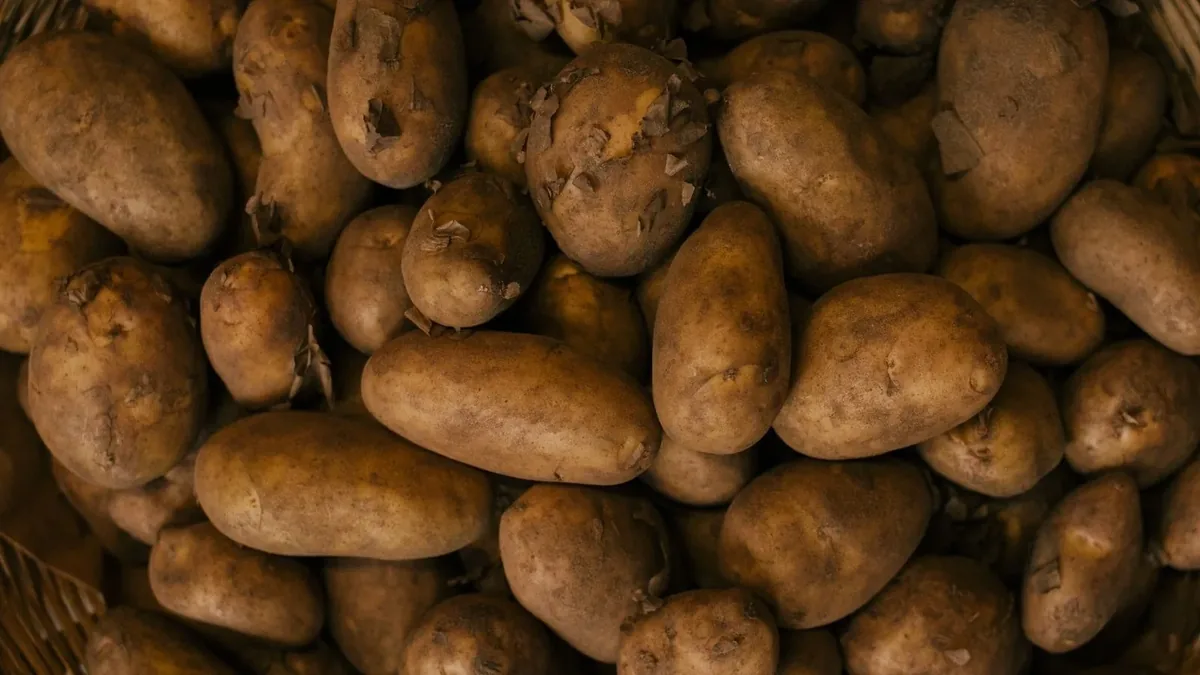
Photo: Ellie Burgin / Pexels
The safe rule
This is about ordinary potatoes, the brown ones. Sweet potatoes are a different plant and this green-skin rule does not apply to them.
- Small green patch, or a few short sprouts, and the potato is still firm: peel thickly, cut well past the green, dig out the sprouts and eyes, then cook.
- Green all over, bitter, soft, wrinkly, or covered in long sprouts: bin the potato. Don't try to rescue it.
- Cooking does not make a green potato safe. Boiling, baking, frying and microwaving don't reliably destroy the compounds that cause the problem.
What the green actually means
The green colour is chlorophyll. Chlorophyll itself is harmless. It is a sign the potato has seen light, on a bench, in a clear bag, or under a kitchen light. The same light triggers the potato to make bitter compounds called glycoalkaloids. The two that matter in potatoes are solanine and chaconine.
Those compounds sit mostly in and just under the skin, and around the eyes and any sprouts. A potato can look only slightly green and still have a higher level in that patch. A bitter or burning taste is the practical warning: if a cooked potato tastes bitter, stop eating it.
Potato leaves, stems and the sprouts themselves are not food. Don't add them to a dish.
When to peel and cut
A small green patch on an otherwise firm potato is the usual pantry case. Peel thickly, then cut away the green flesh and a margin past it, because the compounds sit under the colour you can see. Dig out the eyes at the same time.
Peeling removes 25 to 75% of the glycoalkaloids, which is why a thick peel does more than a quick scrape. If the flesh underneath is still green after that, keep cutting until the green is gone. If you can't get clear of the green without losing most of the potato, throw it out.
Green all over, or green plus a bitter taste, is past the point of trimming. Bin it.
Sprouts: keep or bin
A firm potato with a few short white shoots is still usable. Snap or dig out the sprouts, including the eye they grew from, peel, and cook as usual. The shoots themselves go in the bin, not the pan.
Throw the potato out if any of these are true:
- it is soft or wrinkly
- the sprouts are long
- it is green all over
- it smells off, or it is slimy
A whole bag doesn't have to go because one potato sprouted. Take that one out, keep the firm ones dark, and use them soon.
Why cooking doesn't fix it
Glycoalkaloids such as solanine aren't reliably destroyed by boiling, baking, frying or microwaving. Home cooking doesn't get hot enough, for long enough, to clear them. Peeling and cutting away the green parts is what reduces them. Frying a green potato until it is crisp does not make the green safe.
That's also why a bitter taste after cooking still matters. If the potato tastes bitter or burning, don't finish the plate and don't serve the rest.
If you eat some
A small amount from a potato you trimmed usually causes nothing you would notice. Larger amounts can cause a bitter or burning taste, nausea, vomiting, stomach cramps and diarrhoea.
If someone feels unwell after eating a lot of green or bitter potato, call the Poisons Information Centre on 13 11 26. The line is open 24 hours, from anywhere in Australia. If the person is hard to rouse, having trouble breathing, or collapsing, call triple zero (000).
How to store potatoes
Keep them cool, dark and dry. A cupboard or a paper bag beats a fruit bowl in the sun, and a mesh or paper bag beats a sealed plastic bag that traps moisture. Don't wash them until you're about to cook. Onions stored in the same bowl can make potatoes sprout sooner, so keep the two apart.
The fridge is fine. The UK Food Standards Agency updated its advice in 2023 to say fridge storage doesn't materially raise acrylamide, the compound that can form when starchy food is cooked at a high heat. A warm Australian kitchen is a common reason potatoes sprout and turn green, so the fridge is a practical place for them if the cupboard isn't cool.
Check the bag every week or so. Move any potato that is going soft or green, deal with it using the rule above, and leave the rest in the dark.
Once you've kept a firm potato, it still wants a decent dinner. Curry-leaf oil is the usual finish in our kitchen: roast or pan-fry the potatoes, then toss them with a quick tadka. The method is in curry leaves beyond dal.
FAQ
Can you eat green potatoes if you peel them?
Often, yes, if the green is only a small patch. Peel thickly and cut well past the green. Peeling removes 25 to 75% of the glycoalkaloids, which sit mostly in and under the skin.
Does cooking make green potatoes safe?
No. Glycoalkaloids such as solanine aren't reliably destroyed by boiling, baking, frying or microwaving. Peeling and cutting away green parts is what reduces them.
Can you eat sprouted potatoes if you cut the sprouts off?
Yes, if the potato is still firm. Dig out the sprouts and eyes, peel and cook. If it's soft, wrinkly, has long sprouts, or is green all over, throw it out.
What happens if you eat a green potato?
Usually nothing if it was a small amount. Larger amounts can cause a bitter or burning taste, nausea, vomiting, stomach cramps and diarrhoea. If someone feels unwell after eating a lot of green or bitter potato, call the Poisons Information Centre on 13 11 26.
Can you store potatoes in the fridge?
Yes. The UK Food Standards Agency updated its advice in 2023 to say fridge storage doesn't materially raise acrylamide. Otherwise keep them cool, dark and dry.
This article is general information, not medical advice. If someone is unwell after eating, call the Poisons Information Centre on 13 11 26. In an emergency, call 000.
Written by Neer Vasa, founder of NutriThrive.
These statements have not been evaluated by the TGA. This content is general information only, not medical advice.
Update log
- 10 Oct 2026: Article published.

A practical next step
400g Moringa Bundle
Four 100g pouches of our farm-grown moringa. Save $21 compared with four packs at the $14 original price. Manufactured by NutriThrive and packed in Truganina.
$35.00 / 400g