 NutriThrive
Your Curry Leaf Plant Isn't Dead
Short answer
In a cold-winter city like Melbourne, Canberra or the Adelaide Hills, yellow leaves and winter leaf drop are usually the cold. Curry leaf, Murraya koenigii, is a tropical plant. If the stems are still alive, it is most likely resting, and new leaves tend to arrive once nights warm up, often between September and November.
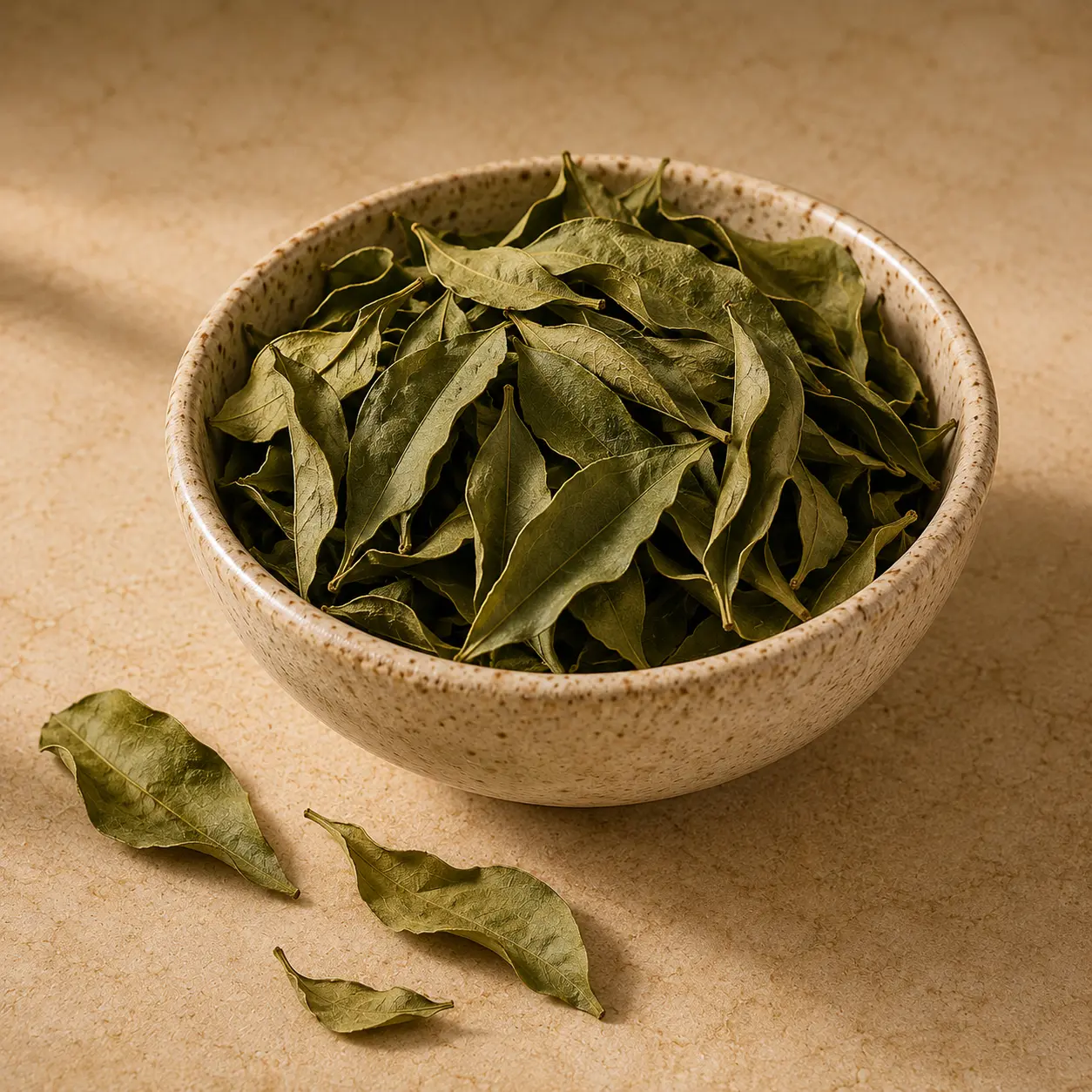
The two problems that look similar are soggy roots from winter watering, and iron chlorosis, which shows as yellow new leaves with green veins. While the plant rests, cook with whole dried curry leaves, 30g for $7, instead of picking the yellow ones.
A curry leaf plant that went yellow in a cold winter can look finished. Bare stems. A few yellow leaflets hanging on. Nothing new. Before you dig it out, stop.
The usual panic is a reaction to normal winter rest. More water and more feed is often what turns a resting plant into a dead one. Leave the plant alone and cook with dried curry leaves until new growth starts.
Why do curry leaf plants turn yellow in winter?
Because it is a tropical plant reacting to cold.
US grower Logee's says of winter yellowing that "Cool temperatures seem to be the major factor", and that it often indicates the plant is heading into dormancy. Closer to home, Melbourne nursery Bulleen Art & Garden says the tree "may lose leaves over winter in colder areas". Canberra gardening writer Jackie Warburton puts it plainly in CityNews: "The colder its environment, the more leaves it loses."
The plant's comfort zone explains why. Plants For A Future lists its best daytime growth at 27 to 41°C, says it tolerates 8 to 47°C, and notes it "will not tolerate heavy frosts". A Melbourne July sits well below that range. Logee's also advises keeping the plant above 40°F (about 4°C), which is a useful floor if yours lives in a pot you can move.
Position matters too. Bulleen Art & Garden says trees against a north- or west-facing wall, which holds warmth, "tend to retain their leaves". In Melbourne they usually grow to around 2 to 3 metres. In warmer subtropical spots they can go taller. Melbourne home grower Liz at Suburban Tomato wrote that in Melbourne these trees "look particularly sad at this time of year", with leaves that "turn yellow and in the coldest climates fall off". That is one grower's experience, and it is a familiar one if you have watched a curry leaf tree through a southern winter.
In the frosty Adelaide Hills, Sophie Thomson told Gardening Australia her curry leaf "hasn't liked me at all", and she grows it in a pot so she can "move it under cover each winter". That pot-and-shelter habit is the same logic Canberra gardeners use when they bring the plant indoors for the cold months.
Is my curry leaf plant dead or just dormant?
If the stems are still alive, it is almost certainly resting. Logee's is blunt about a bare-stemmed plant in winter: "Your plant is fine. It's simply resting."
A quick check many gardeners use is the scratch test. Gently scrape a thin sliver of bark off a stem with your thumbnail. Green and slightly moist underneath means that stem is alive. Brown and dry means that part has died, so try lower down, closer to the base. It is practical garden advice rather than a lab test, but it beats guessing from the outside of the bark.
Do not confuse a resting curry leaf plant with the grey, silvery "curry plant", Helichrysum italicum. CityNews notes that one "is not edible". Different plant, different kitchen.
Can a curry leaf plant survive winter, and when do the leaves come back?
Yes, it can survive winter if the stems are still alive. Leaves return once nights warm up. Logee's says simply that "The leaves will re-grow in spring". One Melbourne grower expects them back "sometime between September and November" (Suburban Tomato). Treat that as one grower's window, not a rule. A cold, late spring pushes it later, so bare stems while the nights are still cold are not a reason to give up yet.
If you are staring at empty stems, the useful question is not whether it has woken up on a calendar date. It is whether the nights are still cold, and whether you have been watering it like summer. Warm nights and drier soil do more for recovery than a panicked feed.
What else turns curry leaves yellow?
Wet roots and iron chlorosis are the two look-alikes, and they need different fixes.
Wet roots. A resting plant uses very little water. Logee's warns that keeping it too wet while resting "will tend to promote root disease (root rot)". Bulleen Art & Garden and Plants For A Future both want free-draining soil. If the pot stays wet for days in winter, that is the first thing to change. Overwatering is the most common way to turn winter rest into a real problem.
Iron chlorosis. This one looks different if you know where to look. The University of Illinois Extension, a general woody-plant source from March 1996 rather than a curry-leaf-specific guide, says iron chlorosis "appears first on the younger or terminal leaves" while the veins stay green, and that iron is available only when soil pH sits between 5.0 and 6.5. It adds that the problem is "aggravated by low temperatures and plants under stress from poor root aeration or soil drainage", which is why winter overwatering can make yellowing worse.
Curry leaf seems prone to it. A Minnesota master gardener on Ask Extension said the plant "has a tendency to become iron deficient", likes slightly acidic soil and temperatures over 50°F (about 10°C), and warned "Your tap water may be basic", suggesting rainwater or distilled water and a chelated iron spray. Plants For A Future gives its preferred pH as 5.5 to 6.5, tolerating 5 to 7. If older leaves look fine but the new growth is pale with green veins in a warm month, look at pH and water before anything else.
Pests are less common. Logee's says it "typically doesn't get many pests" but can pick up mealybug, so check the undersides of leaves if something still looks off after you have ruled out cold, wet soil and iron.
How do you revive a curry leaf plant and harvest without setting it back?
Water less until it is actively growing, keep it warm and sheltered, and go easy once it regrows.
- Winter: let the potting mix dry between waterings, as Plants For A Future suggests for container plants kept indoors. In frosty spots, a pot you can move under cover helps (Sophie Thomson's approach in the Adelaide Hills). In Canberra, CityNews says it "can only survive as an indoor plant during winter".
- Feeding: save fertiliser for the growing season. The Ask Extension answer suggests liquid feed from spring until early autumn, not while the plant is resting.
- Harvesting: CityNews advises taking whole leaf stems and never more than a third of the plant, "or it will lose its vigour for the next year". It also suggests waiting until the plant is one to two years old before you start picking. Stripping a recovering plant for one curry is a fast way to set it back. Until it is growing again, use dried curry leaves, 30g for $7.
- Pruning: Logee's says older plants "can be pruned early in the season just as growth starts", not in deep winter.
If you want leaves for later, Bulleen Art & Garden suggests freezing intact leaf stems picked green in summer or autumn, and says fresh leaves keep about a week in the fridge in a dry plastic bag. Berry seed is toxic, so keep fruit away from kids and pets if your tree sets it.
Can you still cook with yellowing curry leaves?
Nobody seems to have tested it properly. One Melbourne grower wondered whether winter leaves turn bitter, but also pointed at garlic or mustard seeds as equally likely culprits for a bitter dish (Suburban Tomato). The safe bet is to pick the greenest leaves you have and leave the plant to rest.
Fresh leaves have the most aroma. Bulleen Art & Garden and Logee's both say drying costs flavour. While the plant sleeps, dried leaves are the practical off-season option, not a better one.
Our dried curry leaves are whole leaves from our family farm, 30g for $7, packed in Truganina and posted Australia-wide. They keep the tadka going until your plant wakes up. If you also want moringa leaf powder, the moringa and curry leaves combo is $17. For a present, the gift pack is $35 and includes those same dried curry leaves with Darjeeling tea, a handmade soap and moringa powder. Free AU shipping from $49.
How to cook with the dried leaves: how to use dried curry leaves, a curry leaf podi, and a 30-minute dal. For Coles, Woolworths and Indian grocers, see where to buy dried curry leaves in Australia.
The short version
- Cold is the usual cause. Curry leaf is tropical. Yellow leaves and bare stems in a Melbourne, Canberra or Adelaide Hills winter are often dormancy, not death.
- Water less, not more. Wet roots while the plant is resting promote rot.
- Check the stems. Green under a light scratch means alive. Then wait for warm nights.
- Yellow new leaves with green veins point to iron. Curry leaf prefers slightly acidic soil, about pH 5.5 to 6.5, and hard tap water can work against you.
- Harvest gently. Whole stems, never more than a third, and only once the plant is growing again.
Give the plant until the nights are reliably warm. Yellow leaves and bare stems after a cold winter are very often rest, not death.
FAQ
Why do curry leaf plants turn yellow in winter? In a cold winter, yellow leaves and leaf drop are usually the plant resting. Curry leaf is tropical. If the stems are still alive, new leaves tend to come once nights warm up, often between September and November.
Is my curry leaf plant dead or just dormant? If the stems are still alive, it is almost certainly resting. Scrape a thin sliver of bark. Green and slightly moist means that stem is alive. Brown and dry means that part has died, so try closer to the base.
When do curry leaf leaves come back? Leaves grow back in spring, once nights warm up. One Melbourne grower expects them between September and November. A cold, late spring pushes that later.
What else turns curry leaves yellow? Wet roots and iron chlorosis. Wet soil while the plant is resting can cause root rot. Iron chlorosis shows first on new leaves, which turn yellow while the veins stay green.
Can you cook with yellow curry leaves? Pick the greenest leaves you have and leave a resting plant alone. Fresh leaves have the most aroma. Dried leaves are the practical option while the plant is bare.