 NutriThrive
Dried Curry Leaves That Actually Taste of Something: A Buyer's Guide
Dried curry leaves tasting of nothing? How to spot a good pack by colour and aroma, how many to use, how to bloom them in oil and store them in Australia.
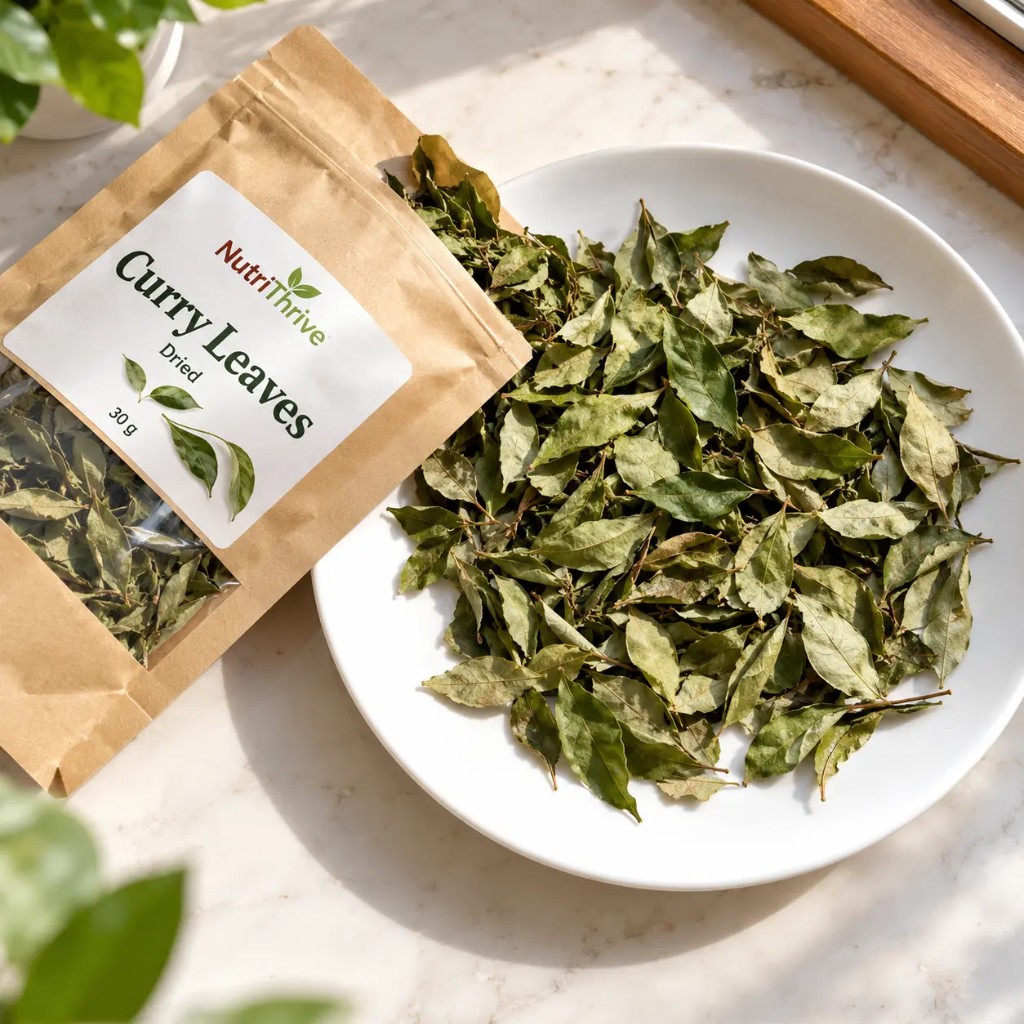
If you've ever opened a bag of dried curry leaves, sniffed it and smelled nothing, you're not alone. Brown, dusty, flat leaves that add little beyond a few crunchy flecks are one of the most common complaints from home cooks.
The good news is that dried curry leaves can bring real flavour to your cooking. Two things decide it: the quality of the leaves before you buy them, and what you do with them in the pan. Here's how to tell a good pack from a tired one, and get the most out of every leaf.
Why so many dried curry leaves taste of nothing
Curry leaves get their green, citrusy aroma from volatile compounds. Drying always costs some of that aroma, and how the leaves are dried makes a big difference.
- Sun-dried leaves dry fast but tend to turn pale or brown, and much of the aroma goes with the colour.
- Shade-dried leaves dry slowly out of direct sun. In one laboratory comparison of drying methods, shade-dried curry leaves kept the most essential oil.
- Age and storage do the rest. Leaves that have sat for months in thin plastic in a warm shop, or by your stove, keep fading.
So "dried curry leaves" covers everything from leaves with plenty of character to leaves that are mostly roughage. Your eyes and nose tell you which one you've got.
A 60-second quality checklist
Use this whether you're standing in a shop or opening a pack that's just arrived:
- Colour: look for olive to muted green. Some dulling is normal. Grey-brown or tan all the way through usually means harsh drying or old stock.
- Aroma: crush one leaf between your fingers. A good dried leaf gives off a faint but definite green, slightly citrusy, toasty smell. If you smell nothing, or just dust or hay, the cooking result will be the same.
- Whole leaves vs broken: mostly whole leaflets are a good sign. Lots of crumbs and powder at the bottom of the bag means the leaves were handled roughly or are old, and fine pieces lose aroma faster.
- Stems: a few thin stems are normal. A pack that's heavy with thick woody stalks gives you fewer usable leaves for the weight.
- Moisture and spots: leaves should be dry and crisp, not leathery or clumped. Black patches, a musty smell or anything that looks like mould means it goes in the bin.
- Packaging and origin: a resealable, light-blocking pouch protects aroma far better than a clear, thin bag. A label that says where the leaves were grown and how they were dried is a good sign.
How many dried curry leaves to use
Most recipes are written for fresh leaves, which is where people get caught out. As a starting point for a dish serving four:
| Dish | Fresh leaves | Dried leaves (good quality) |
|---|---|---|
| Dal or sambar | 10 to 12 | about 20 |
| Potato or cabbage stir-fry | 10 to 12 | about 20 |
| Lemon rice or tempered rice | 8 to 10 | 15 to 20 |
| Coconut chutney tempering | 6 to 8 | 12 to 15 |
| Fish or prawn curry | 5 to 8 | 10 to 15 |
The common rule of thumb is to double the fresh quantity. Two caveats:
- Doubling only works if the leaves have aroma to give. A big handful of flavourless leaves won't rescue a dish. Crush-test a leaf first. If it smells strong, you can lean towards the lower end.
- Bold dishes hide curry leaves. Tamarind, tomato and heavy spice blends absorb their flavour. Plain dal, rice and coconut dishes show off every leaf.
For more on quantity and flavour trade-offs, see fresh vs dried curry leaves.
How to bloom dried curry leaves in oil (without burning them)
This is the step that matters most. Fat carries curry leaf aroma through a dish, and frying dried leaves briefly in oil draws out more of their flavour than dropping them into a simmering pot. Dried leaves have no water in them, though, so they scorch faster than fresh ones. If you've ever ended up with black, bitter flakes, that's why.
Step by step
- Heat 1 to 2 tablespoons of oil or ghee over medium heat until it shimmers. Don't let it smoke.
- Add mustard seeds first (and cumin or urad dal if your recipe uses them). Let most of the mustard seeds pop.
- Turn the heat down to low, then add the dried curry leaves. Crumble them lightly between your palms as you drop them in to release more aroma.
- Stir for 5 to 10 seconds, only until they smell fragrant and darken very slightly at the edges. Don't wait for them to turn brown.
- Move straight on. Add your onions or other ingredients, or pour the tempering over a finished dal. Add ground spices like turmeric last, so they don't scorch.
Dried leaves barely crackle the way fresh ones do, so don't wait for that cue. Go by smell and time.
When not to fry them
For long-simmered dishes like sambar, rasam or a pot of curry, bloom half the leaves in the tempering and add the rest to the liquid. Dried leaves soften and keep releasing flavour as they simmer. For dry spice powders (podi), roast the leaves gently in a dry pan with the other ingredients and grind them just before use.
More everyday ideas: how to use curry leaves in Australian cooking.
Storing dried curry leaves so they stay fragrant
Dried curry leaves don't spoil quickly, but they do fade. To slow that down:
- Keep air and light out. Squeeze the air out of the resealable pouch each time, or move the leaves to a small airtight jar kept in a dark cupboard.
- Keep them away from heat. The shelf above the stove or next to the oven is the worst spot in the kitchen.
- Keep them dry. Always use a dry spoon or dry fingers. Even a little steam or moisture can make the leaves leathery and brown.
- Keep them whole. Crush leaves as you cook rather than grinding a batch in advance, because powder loses aroma much faster.
- Use them within a few months of opening. Crush-test one every so often. Once the smell has mostly gone, they've done their job.
Full fridge, freezer and pantry detail: how to store curry leaves.
Fresh vs dried: when each one makes sense
Fresh curry leaves have the brightest flavour. If you have a tree in the backyard or a grocer down the road, use them for dishes where curry leaves are the star, like coconut chutney or a simple tempered rice. Frozen fresh leaves come a close second. Freeze them dry and flat on a tray, then add them to the oil straight from the freezer.
Dried leaves earn their place because fresh ones aren't always easy to get. Supermarket punnets are small and often sold out. Fresh sprigs blacken within a week or two in the fridge, and many shops can't post fresh produce. A good pack of dried leaves sits in the pantry ready for a weeknight dal and travels anywhere in Australia. The key word is good.
FAQ
Can I use dried curry leaves instead of fresh?
Yes. Use about twice as many and bloom them briefly in oil. The flavour is softer and more toasty than fresh, but well-dried leaves still make a noticeable difference to dal, sambar and vegetable dishes.
Do I need to soak dried curry leaves first?
No, and for a tempering you shouldn't. Wet leaves make hot oil spit. Add them dry, straight from the pack.
What can I use if I have no curry leaves at all?
Nothing tastes quite the same. In coconut curries, a torn makrut lime leaf or two gives a similar citrus note. In dal, a bay leaf plus a strip of lime zest works. In a simple tempering, it's often best to leave them out. Full swap ratios: curry leaf substitute guide.
Is curry powder made from curry leaves?
Usually not. Most curry powders are blends of coriander, cumin, turmeric and other spices. Swapping in curry powder adds a different flavour rather than replacing the leaf. See curry leaves vs curry powder.
Do you eat the leaves or take them out?
Either is fine. In South Indian cooking the leaves usually stay in the dish. Crisp, bloomed leaves are pleasant to eat, and anyone who doesn't like the texture can set them aside like a bay leaf.
Can I bring fresh curry leaves back from overseas?
Declare them, and expect them to be checked or taken. Curry leaf is a host of huanglongbing (citrus greening), a serious citrus disease that Australia doesn't have, and biosecurity officers have seized infested curry leaves at Melbourne Airport. Check the Department of Agriculture's import conditions before you travel, and check interstate quarantine rules before moving plants between states.
The bottom line
Dried curry leaves aren't all the same. Judge them by colour, aroma, how whole they are and how they're packed, then use enough of them and bloom them gently in oil. Treated that way, every leaf earns its place in the pot.
If you'd like to try leaves where the drying and packing are done with flavour in mind, our NutriThrive curry leaves are grown on our family farm in Gujarat, shade-dried, and packed in small batches in Truganina, Melbourne. Give a leaf the crush test when your pack arrives. That's the best way to judge any curry leaf, ours included.
Written by Neer. NutriThrive Australia.
Shop shade-dried curry leaves
Whole leaflets, packed in Truganina. $7 / 30g. Crush-test a leaf when your pack arrives.
Update log
- 2 Oct 2026: Article published.

After the crush test
Shade-dried curry leaves from our farm
Whole leaflets, shade-dried and packed in small batches in Truganina. Crush-test a leaf when your pack arrives.
$7.00 / 30g