 NutriThrive
Protein Powder vs Moringa: What Each One Actually Does
Which protein powder is actually worth it in Australia? We compare whey vs plant vs moringa for purity, value & results. Updated May 2026 with lab data.
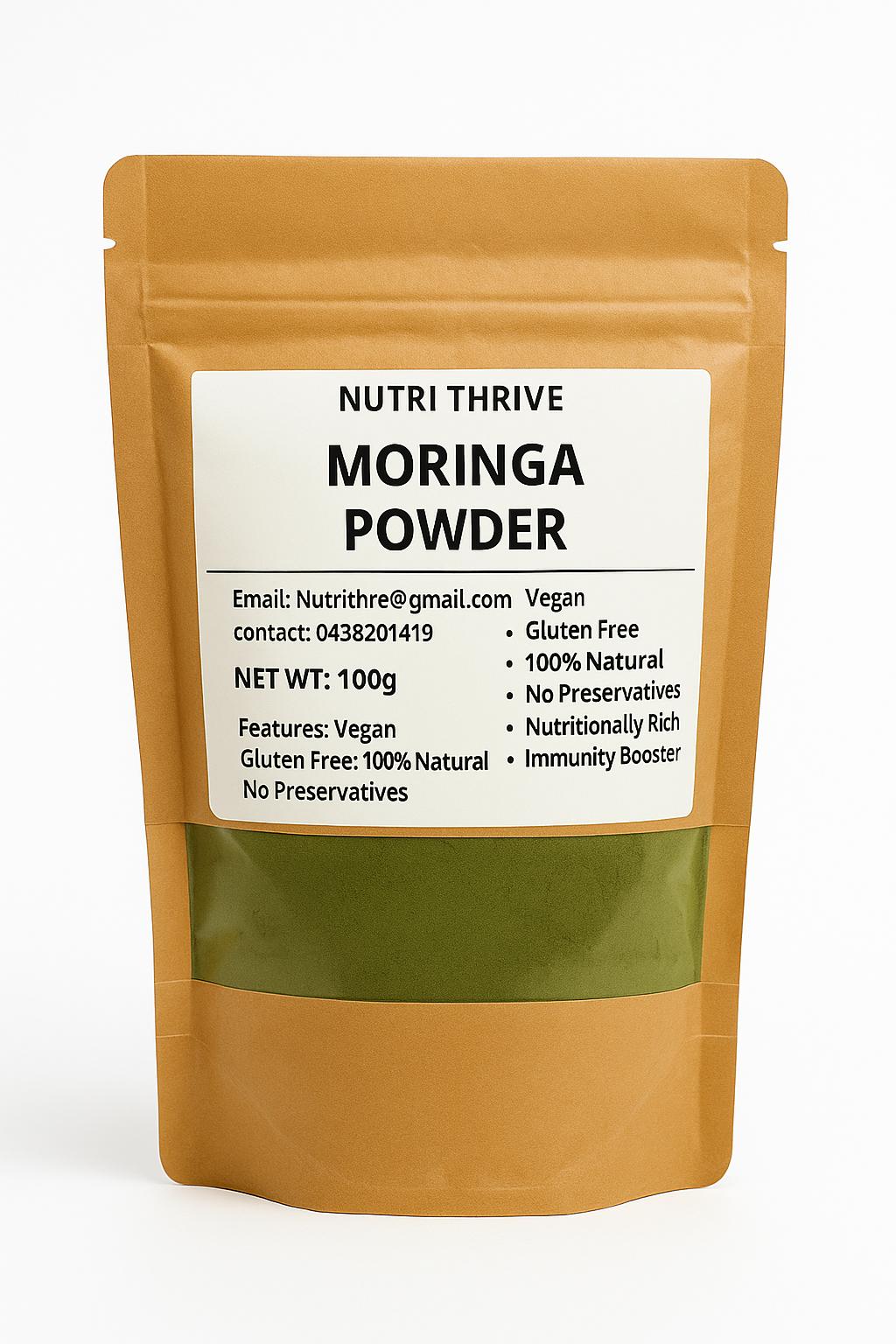
Both are sold in the health aisle. Both come in tubs. Both get marketed as things active people "should" be taking. But protein powder and moringa solve completely different problems, and if you don't know which problem you actually have, you'll be disappointed by one of them.
This is a genuinely independent look at both. NutriThrive sells moringa powder, not protein powder, which should tell you we have more to gain by being honest about what moringa doesn't do than by overselling it.
The confusion starts in the aisle
The supplement industry has done an excellent job of collapsing very different products into a single category. "Health supplements" can mean a 2kg tub of whey protein concentrate, a 100g bag of moringa leaf powder, a capsule of fish oil, or a pre-workout stimulant. These things have almost nothing in common except the shelf they're on.
Asking "should I take protein powder or moringa?" is a bit like asking "should I eat bread or spinach?" They serve different biological purposes. Whether you need one, the other, or both depends on what gap you're trying to fill.
What protein powder actually does
Protein powder is a macronutrient concentrate. Its job is to deliver protein, usually 20 to 30g per serve, in a convenient, quick-absorbing form.
The mechanism
After resistance training, your muscle fibres undergo micro-damage. To repair and grow them, your body needs amino acids, the building blocks of protein. Leucine, in particular, triggers muscle protein synthesis (MPS). A serve of quality whey concentrate or isolate typically delivers enough leucine to meaningfully stimulate MPS.
Protein powder isn't magic. It just gets protein into your bloodstream efficiently. If you can hit the same protein targets from chicken, eggs, Greek yoghurt, or legumes, a protein supplement does nothing additional. It's a convenience tool, not a special ingredient.
Who actually benefits from it
- People who strength train and struggle to hit 1.2 to 1.6g of protein per kg bodyweight from food alone
- People with high caloric needs (athletes, people in a muscle-building phase) who need convenient calorie-dense protein
- People with time constraints who can't get a proper protein-rich meal in post-training
Most people who eat regular meals including meat, dairy, or legumes are getting more protein than they think. A 150g chicken breast is about 45g of protein. Two eggs and Greek yoghurt at breakfast is another 30 to 35g. If you're already there, a protein supplement is optional.
Reading the label, what matters
Brands like Musashi are some of the more widely available Australian options, stocked in pharmacies and supermarkets. Here's how to evaluate any protein powder, regardless of brand:
- Protein per 100g, compare this, not per serving (serving sizes vary wildly to game impressions). A solid whey concentrate sits at 70 to 80g per 100g. Anything under 60g means significant filler.
- Total sugar, some flavoured powders add 15 to 20g of sugar per serve. Not a problem for performance, but relevant if you're managing blood sugar or total calories.
- Ingredients list, shorter is usually cleaner. Whey protein concentrate, cocoa, natural flavouring is a reasonable list. A paragraph of additives warrants more scrutiny.
- Mass gainers, these are high-carbohydrate blends designed for caloric surplus. They are not the same as a protein powder and serve a very different purpose. Read before you buy.
- Formulated supplementary sports food label, this is the Australian regulatory classification for protein supplements. It means it's intended as a supplement to a balanced diet, not a meal replacement.
What moringa actually does
Moringa is a whole-food leaf powder, not a macronutrient supplement. Its purpose is completely different.
The mechanism
Dried moringa leaf is one of the more nutrient-dense plant foods you can find: iron (~15% of daily requirements per serve), calcium, vitamins A, C, E, K, and a range of B vitamins, plus antioxidants including quercetin, chlorogenic acid, and isothiocyanates.
It doesn't build muscle directly. It supports the biological systems that do, iron for oxygen transport to muscle tissue, B vitamins for cellular energy production, antioxidants for managing exercise-induced inflammation, Vitamin C for collagen synthesis and immune function.
Think of it as filling the nutritional gaps that a busy Australian diet typically leaves open, not as a macronutrient intervention.
What moringa is NOT
A teaspoon of moringa powder contains roughly 0.5 to 1g of protein. You would need to eat an impractical amount to get meaningful protein from moringa. Anyone telling you moringa is a protein source is either misinformed or misleading you. Don't buy it as a protein supplement, that's not what it is.
Who actually benefits from moringa
- People with iron-deficiency or borderline-low iron (common in women who train, plant-based eaters, and desk workers)
- People whose diets are high in processed food and low in fresh vegetables, the micronutrient gaps are real
- People looking to reduce caffeine dependence, the iron and B-vitamin content supports natural energy metabolism (not a stimulant; a biological support)
- People looking for a convenient daily whole-food nutritional top-up
Side by side
| Factor | Protein powder | Moringa powder |
|---|---|---|
| Primary purpose | Deliver protein (macronutrient) | Deliver micronutrients and antioxidants |
| Protein per serve | 20 to 30g (meaningful) | 0.5 to 1g (negligible) |
| Key nutrients | Amino acids, leucine | Iron, B vitamins, Vitamin C, antioxidants |
| Who benefits most | High-protein-need athletes; gap fillers | Micronutrient-deficient adults; plant-based eaters |
| Stimulant effect | None (unless pre-workout blend) | None, caffeine-free |
| Typical daily dose | 1 serve (20 to 30g scoop) | 1 to 2 teaspoons (2 to 4g) |
| Can replace food? | No, supplement to food | No, complement to a varied diet |
Can you use both?
Yes, and they complement each other well. They don't overlap and they don't conflict.
A practical pattern for someone who trains 3 to 4 times per week:
- Post-training: protein shake (whey concentrate or isolate) to hit your daily protein target
- Morning or midday: moringa stirred into a smoothie or oat milk for micronutrient density
- Both are additions to, not replacements for, real food meals
If budget is a constraint, go food-first (eggs, chicken, legumes cover the protein side well), and use moringa as the more affordable daily micronutrient support. Moringa powder is typically $0.15 to 0.25 per gram; a daily 2 to 4g serve costs less than a dollar a day.
The honest take
Most Australians who feel "off" are not protein-deficient. They're getting enough protein from food. What they're often low on is micronutrients, iron, B vitamins, antioxidants, which take a subtler but real toll on energy, mood, and recovery.
Protein powder solves a specific problem (macronutrient gap). Moringa solves a different problem (micronutrient gap). Know which problem you're solving before you buy anything.
Fill the micronutrient gap with moringa
TGA-path moringa leaf powder from Melbourne, view NutriThrive moringa powder.
Is moringa legit? Science vs marketing · Moringa and energy: honest answer
Sources: Sports Dietitians Australia · NIH Office of Dietary Supplements · TGA (Therapeutic Goods Administration). NutriThrive sells moringa powder and does not sell or endorse any protein powder brand. This article is general information only, not medical or dietetic advice.

A practical next step
Moringa Powder
Grown on our farm, shade-dried and manufactured by NutriThrive. Tested in Australia and packed in Truganina. Same-day dispatch before 2pm, Monday to Friday.
$11.00 / 100g