 NutriThrive
Darjeeling Black Tea Australia: Buying & Brewing Guide (2026)
How to choose, brew, and store Darjeeling black tea in Australia, plus how it compares to English Breakfast and where to buy loose leaf online.
Quick Answer
Darjeeling is a regional black tea from the Himalayan foothills of West Bengal — lighter and more aromatic than most supermarket English Breakfast blends. Brew at about 85–90°C for 3–5 minutes, store airtight away from the stove, and buy loose leaf with clear origin labelling if you want the muscatel character people talk about.
- Flush (harvest timing) changes flavour more than brand slogans do — first flush is lighter; second flush is richer.
- Boiling water is the fastest way to make good Darjeeling taste harsh.
- Compared with English Breakfast, Darjeeling is usually lighter, less malt-forward, and happier without heavy milk.
Australians often meet “Darjeeling” as a word on a tea bag box that tastes like generic black tea. Real Darjeeling — loose leaf from the named region — is a different drink: floral, sometimes fruity, and closer to a tasting tea than a builder’s brew. This guide covers how flushes work, how to brew without bitterness, how it compares to English Breakfast (without rewriting that whole comparison), how to store it in Australian kitchens, and where to buy it online.
What Darjeeling is: region, flush, and flavour
Darjeeling tea is grown in the Darjeeling district of West Bengal, India, at elevation in the Himalayan foothills. The combination of altitude, cool nights, and specific cultivars produces a black tea that is often described as muscatel — a grape-like, floral note that shows up more clearly in some harvests than others. It is still Camellia sinensis; the difference is terroir and processing, not a different plant species.
Flush means harvest window. First flush (early spring) tends to be lighter, greener-edged, and more delicate. Second flush (early summer) is usually richer, fruitier, and more of what people mean when they say “classic Darjeeling.” Later flushes and blends can be stronger still. You do not need to memorise estate names to drink well — but knowing whether a pack leans first- or second-flush helps you set expectations. For a deeper flush comparison aimed at Australian buyers, see our first flush vs second flush guide.
Flavour-wise, expect less malt and roast than Assam-heavy breakfast blends, and more aroma per sip when the leaf is fresh and the water is not boiling. If your only reference point is a dusty tea bag, loose-leaf Darjeeling will feel like someone turned the volume up on perfume and turned the volume down on bitterness — provided you brew it properly.
Geographic indication (GI) status for Darjeeling tea exists to protect the regional name — similar in spirit to how champagne is protected. In practice, Australian retail labelling quality varies. A pack that says “Darjeeling style” or buries origin in tiny print may be a blend. Prefer sellers who say Darjeeling clearly and show leaf you can inspect. You do not need a single-estate obsession to drink well; you do need the tea to actually come from the region people are paying for.
How to brew Darjeeling properly
Most bitterness complaints are water temperature problems, not “bad tea.” Use this as a default, then adjust to taste:
- Water: Start at 85–90°C for first flush. A fuller second flush may suit 90–95°C. Avoid a rolling boil.
- Leaf: 1–2 teaspoons of loose leaf per cup (roughly 2–3g), depending on how strong you like it.
- Time: 3–5 minutes. Taste at 3 minutes; go longer only if you want more body.
- Vessel: A teapot with an infuser, or a cup strainer, beats trapped tea-bag dust. Give the leaf room to open.
- Milk: Optional. Try the first cup plain. Add a splash only if you prefer a rounder, breakfast-style cup.
Reuse is possible for good whole leaf — a second shorter steep often works. Dust-grade bags usually do not. For a more detailed brew walkthrough, see how to brew Darjeeling tea perfectly.
Hard Melbourne tap water can mute aroma slightly; if your kettle scales quickly, an inexpensive filter jug helps more than buying a fancier tin. Soft rainwater areas may need less adjustment. Either way, rinse the cup of yesterday’s milky film before tasting a plain cup — residual milk fat changes how you judge the leaf.
Caffeine sits roughly in the 40–50mg per cup range for typical black tea — about half a standard coffee. That makes Darjeeling a practical mid-afternoon option for people who want a ritual without a late coffee spike. If sleep is the constraint, see how much caffeine is in Darjeeling rather than treating tea as caffeine-free. A common Melbourne pattern that works: coffee before midday, Darjeeling after lunch, nothing caffeinated in the late evening. Adjust earlier if you are a slow caffeine metaboliser.
Darjeeling vs English Breakfast (short version)
English Breakfast is usually a blend designed for milk, toast, and a strong morning cup — often Assam-forward, sometimes with Ceylon or other origins. Darjeeling is a regional tea with a lighter body and more aromatic top notes. If you want a deep dive rather than a recap, read the full comparison: Darjeeling tea vs English Breakfast.
| Point | Darjeeling | English Breakfast |
|---|---|---|
| Style | Regional, aromatic | Blend, maltier/stronger |
| Milk | Optional; often better plain | Commonly with milk |
| Best moment | Morning tasting cup or afternoon | Hearty breakfast cup |
Neither is “better.” They solve different mornings. Keep Breakfast for the heavy cup; keep Darjeeling when you want aroma without the same punch.
How to store Darjeeling in Australia
Heat, light, humidity, and kitchen smells flatten tea. Store loose leaf in an airtight tin or pouch, away from the oven and the spice rack. Melbourne winters are kind to tea; Queensland humidity is not — reseal promptly after scooping. Do not keep tea in the fridge. Condensation and food odours are worse than a cupboard.
Opened packs are best within about 6–12 months for aroma. The tea does not suddenly become unsafe after that; it just tastes quieter. If your cup smells like cardboard or the cupboard, the leaf is tired. Keep the scoop dry — wet spoons from a rinsed mug are a quiet way to ruin a pouch. If you buy larger packs than you’ll finish in a few months, split into a daily tin and a sealed backup in the dark cupboard so you are not opening the full volume every morning.
Where to buy Darjeeling black tea in Australia
Supermarket tea bags labelled “Darjeeling” vary widely in leaf grade. For a clearer cup, buy loose leaf from a specialist or a small Australian packer who states origin and packs in modest batches. Check for whole or broken leaf you can see, not only dust. Price is not a perfect quality signal, but extremely cheap “Darjeeling” in a giant bag is often a stretch blend.
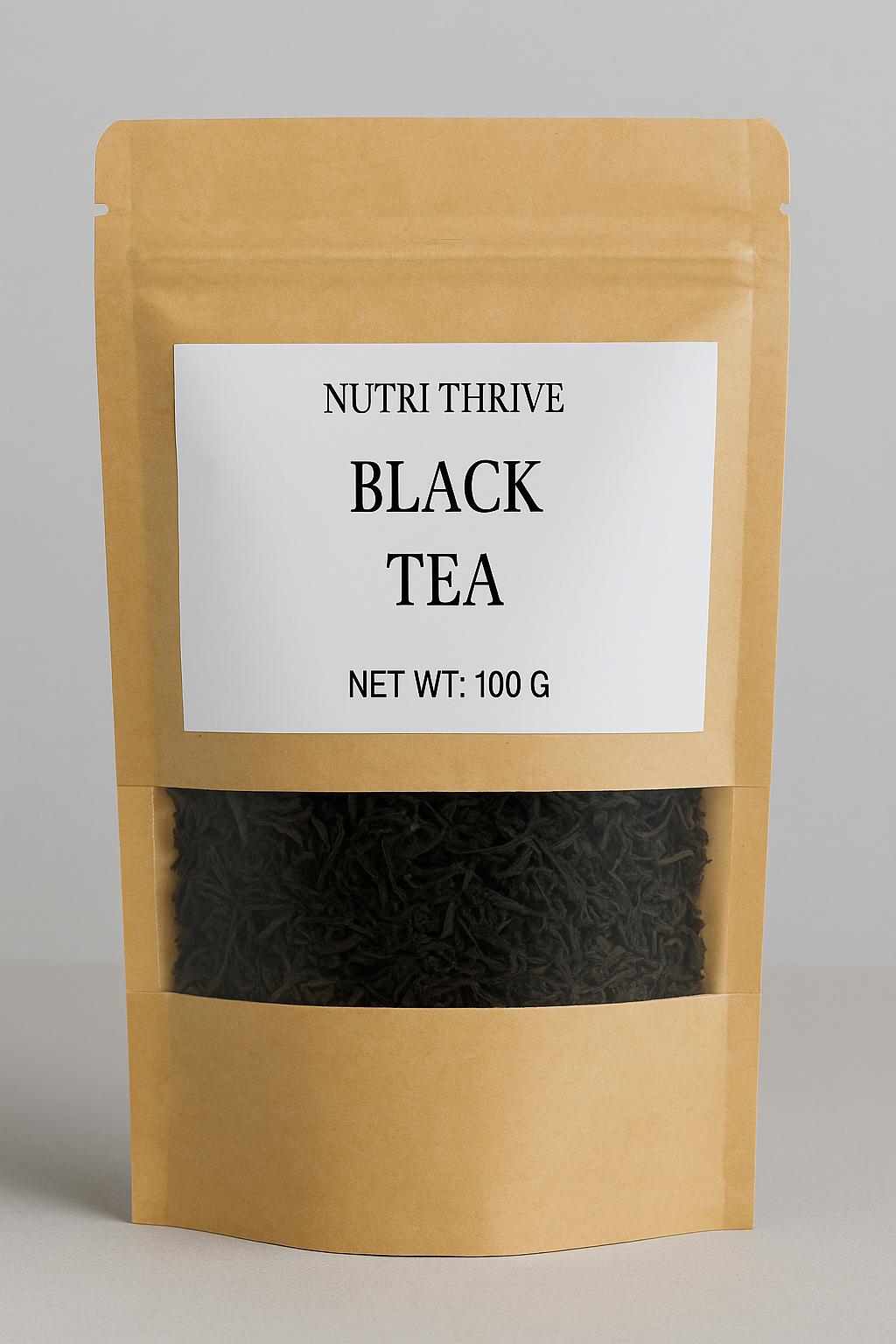
NutriThrive packs Darjeeling black tea as loose leaf from Melbourne (Truganina). Current listing is from $7.50. Free shipping applies on Australian orders over $79 (international free-shipping threshold $90). Same-day dispatch is the target for orders before 2pm on business days. If you are comparing online options, weigh price against leaf visibility, packing date, and whether the seller answers basic brew questions — specialty tea should come with practical guidance, not only a lifestyle photo.
Gift context matters in Australia too: a 100g pouch of proper loose leaf is a stronger present than a novelty mug with three dusty bags inside. Pair with a simple note on water temperature and you’ve given someone a drinkable habit, not clutter.
Shop Darjeeling black tea
Loose leaf, packed in Melbourne. From $7.50. Same-day dispatch before 2pm.
Brew our Darjeeling black tea, free AU shipping over $79 when you mix your basket with moringa powder or dried curry leaves.
FAQ
What temperature should I brew Darjeeling at?
Start at about 85–90°C for first flush; a fuller second flush may suit 90–95°C. Avoid a rolling boil. Use 1–2 teaspoons of loose leaf per cup and taste from 3 minutes.
Is Darjeeling lower in caffeine than coffee?
Usually yes. A cup of Darjeeling black tea is roughly 40–50mg of caffeine versus about 80–100mg for a standard coffee — useful if you want a lighter afternoon cup.
Should I add milk to Darjeeling?
Milk is optional. Many people drink first-flush style cups without milk to taste floral notes; second-flush and stronger cups handle a splash of milk better. Taste it plain first.
How long does loose-leaf Darjeeling keep?
In an airtight container away from heat, light, and strong kitchen smells, good loose leaf stays pleasant for many months. Use within about 6–12 months of opening for best aroma.
Where can I buy Darjeeling black tea online in Australia?
Look for loose leaf with clear origin labelling and recent packing. NutriThrive ships Darjeeling black tea from Melbourne — see the product page — with free shipping over $79 within Australia.
Written by Neer. NutriThrive Australia.
General consumer information only — not medical advice. These statements have not been evaluated by the TGA.
Further reading: Darjeeling black tea product page · vs English Breakfast · Caffeine in Darjeeling
Update log
- 13 Aug 2026: Article published.

Shop the tea
Order Darjeeling black tea in Australia
Family-farm Darjeeling, packed in Truganina. Free AU shipping from $79 when you combine with other products.
$7.50 / 100g