 NutriThrive
Moringa Powder Smoothie Recipes Australia: 5 Easy Ones That Actually Taste Good
Short answer
A moringa powder smoothie is the easiest way to use moringa powder every day. Blend 1/2 to 1 teaspoon into a smoothie you already like, and the taste mostly disappears.
Use a small culinary amount that suits the label and your taste. Spoon weights vary; a measured 3g costs $0.33 at $11/100g. This is a recipe-cost example, not a daily dose recommendation.
Moringa is food, not medicine. It is dried leaf powder, and it fits into breakfast the same way spinach or cocoa does. Below: five simple recipes, honest taste tips, and the real cost per smoothie.
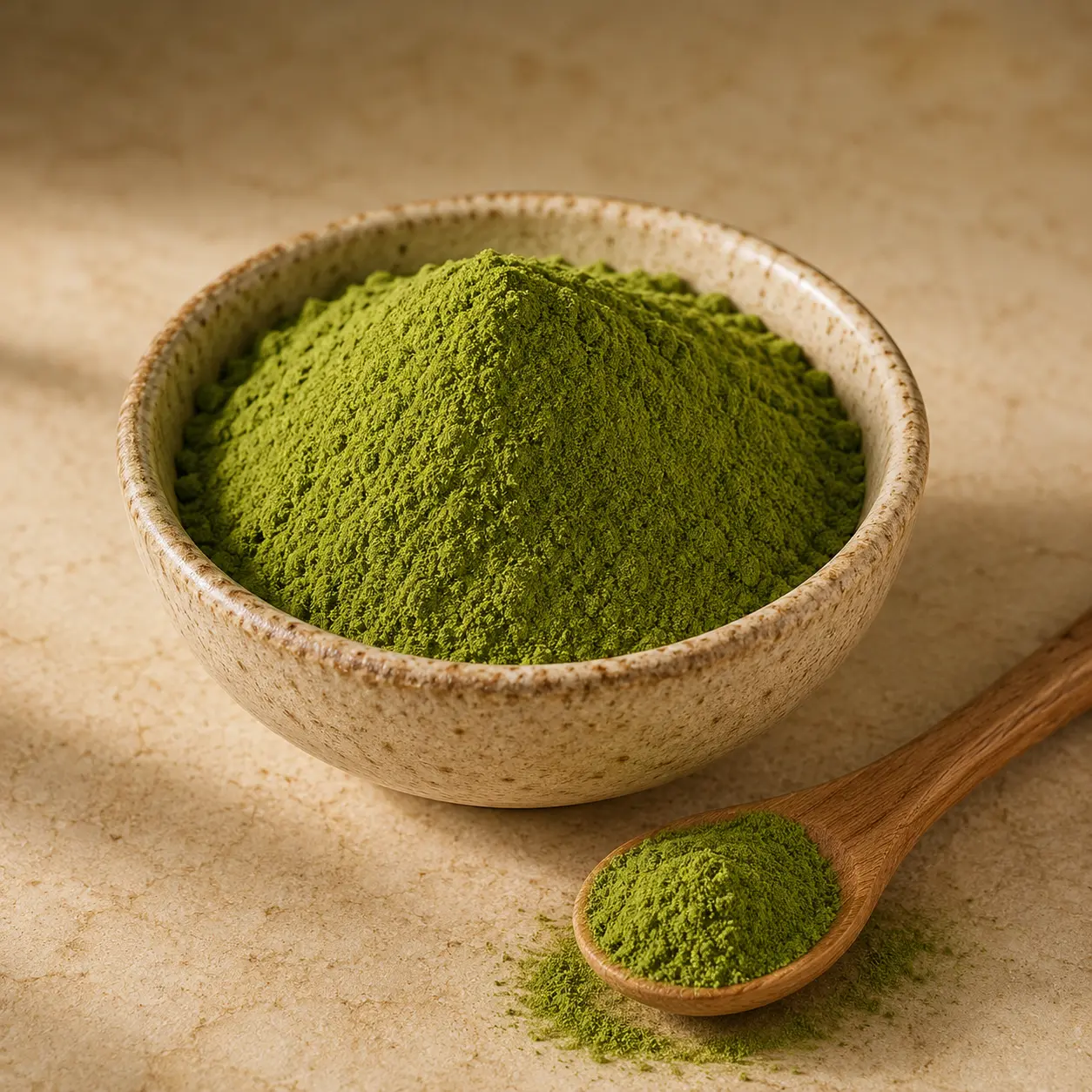
How much moringa powder per smoothie?
The recipes use 1/2 to 1 teaspoon as a culinary range. Use less if you dislike the flavour, and follow the food label. A spoon does not have a fixed gram weight; use scales if you want an exact cost or portion.
There is no established medical dose. Read how much moringa powder per day in Australia, and check with a GP or pharmacist before regular use if pregnant, breastfeeding, taking medication or managing a health condition.
What does it cost per smoothie?
Moringa powder sounds expensive until you do the maths. NutriThrive moringa powder is $11 for 100g, $22 for 200g, and $40 for 400g, with free AU shipping from $49.
At $11 for 100g, that is $0.11 per gram. Using a measured 3g portion, the moringa ingredient costs $0.33. Fruit, milk and other ingredients cost extra.
A 100g pouch at $11 gives you about 33 smoothies using 3g each — a month of breakfasts for $11. The 200g pouch is $22, and the 400g pouch is $40, which works out to $10 per 100g and is the best value if you make one every day.
You can buy it here: moringa powder, $11 for 100g.
How to hide the taste
Moringa powder tastes green and earthy. On its own in water it is not pleasant. That is normal, and it is fixable. These four things hide the taste best:
- Frozen banana. The cold and the sweetness cover the green flavour better than anything else.
- Cocoa or cacao. Chocolate flavour is strong enough to carry the moringa with it.
- Citrus. Lemon, lime or orange juice lifts the whole smoothie and cuts the earthy taste.
- Yoghurt. The creamy, slightly sour taste smooths out the powder.
Also: blend the moringa in properly. Put the powder in with the liquid first and blend for 20 to 30 seconds, so it mixes in without lumps.
Taste-fix table
| Problem | Fix |
|---|---|
| Tastes too green or grassy | Use frozen banana, or add cocoa — both cover the green flavour |
| Tastes bitter | Add 1 teaspoon honey, or use mango or berries instead of plain water |
| Tastes sour or sharp | Use milk and yoghurt instead of citrus, and skip the lemon that day |
| Lumpy or gritty | Blend the powder with the liquid first, for 20 to 30 seconds, before adding fruit |
| Too thick | Add 50 to 100ml more milk or water and blend again |
| Green colour puts you off | Use the berry or chocolate recipe — the colour is hidden completely |
What not to do: do not boil it — use cold or room-temperature ingredients. Do not use a whole tablespoon on day one; start at 1/2 teaspoon. And do not mix it into plain water and call it a smoothie — it needs fruit, yoghurt or cocoa to work.
If you are still unsure about the flavour, read what does moringa powder taste like, the honest guide.
The 5 recipes
All five make one large smoothie, about 350 to 400ml, with 1/2 to 1 teaspoon of moringa powder. Use less for a milder flavour; follow the food label.
1. Banana and peanut butter
The best one to start with — it tastes like a normal banana smoothie.
Ingredients
- 1 frozen banana, about 120g
- 1 tablespoon peanut butter, about 16g
- 250ml milk or oat milk
- 1/2 to 1 teaspoon moringa powder
- 1 teaspoon honey, optional
- 4 ice cubes
Steps
- Pour the milk in, add the moringa powder, and blend for 10 seconds.
- Add the frozen banana, peanut butter, honey and ice, and blend for 30 seconds. Drink straight away.
Why it works: banana and peanut butter are both strong flavours, and the cold banana hides the green taste.
2. Mango and coconut
Sweet, cold and simple.
Ingredients
- 150g frozen mango pieces
- 200ml coconut water
- 50ml coconut milk
- 1/2 to 1 teaspoon moringa powder
- Juice of 1/2 lime
- 4 ice cubes
Steps
- Pour the coconut water in, add the moringa powder, and blend for 10 seconds.
- Add the mango, coconut milk, lime juice and ice, and blend for 30 seconds.
Why it works: mango is sweet and strong, and the lime cuts the earthy taste. Use frozen mango — the cold helps.
3. Berry and yoghurt
The thickest recipe here, more like a breakfast bowl you can drink.
Ingredients
- 150g frozen mixed berries
- 150g Greek yoghurt
- 150ml milk
- 1/2 to 1 teaspoon moringa powder
- 1 teaspoon honey, optional
Steps
- Pour the milk in, add the moringa powder, and blend for 10 seconds.
- Add the berries, yoghurt and honey, and blend for 30 to 40 seconds until thick.
Why it works: yoghurt and berries are sour and strong, and their colour hides the green powder.
4. Green smoothie: spinach, apple and lemon
Yes, this one is green — and the freshest-tasting, thanks to the lemon.
Ingredients
- 1 handful baby spinach, about 30g
- 1 green apple, cored and chopped, about 150g
- 250ml cold water or coconut water
- 1/2 lemon, juiced
- 1/2 to 1 teaspoon moringa powder
- 1/2 frozen banana, about 60g, optional but recommended
Steps
- Pour the water in, add the moringa powder and spinach, and blend for 20 seconds.
- Add the apple, lemon juice and frozen banana, and blend for 30 seconds.
Why it works: apple and lemon give it a fresh, sharp taste, and spinach makes the moringa flavour feel normal.
5. Chocolate and banana
For people who do not like green drinks at all — it tastes like chocolate milk.
Ingredients
- 1 frozen banana, about 120g
- 1 tablespoon cocoa powder, about 7g
- 250ml milk
- 1/2 to 1 teaspoon moringa powder
- 1 teaspoon honey or maple syrup, optional
- 4 ice cubes
Steps
- Pour the milk in, add the moringa powder and cocoa, and blend for 10 seconds.
- Add the frozen banana, honey and ice, and blend for 30 seconds.
Why it works: cocoa is the strongest flavour here and covers the moringa completely.
Nutrition depends on your ingredients
The milk, yoghurt, fruit and peanut butter supply most of the energy and protein in these recipes. Dairy and soy milk differ from oat milk and coconut water, so we have not assigned one calorie or protein figure to recipes with interchangeable ingredients.
For a specific calculation, use the nutrition labels and the weights you actually add. A small amount of moringa is a food ingredient, not a protein supplement or a guaranteed meal replacement.
At a measured 3g, the moringa component costs $0.33 from the 100g pouch, or $0.30 from the 400g pouch. The rest of the smoothie is additional.
For format comparisons, see moringa capsules vs powder.
Blender or shaker?
A blender is better. It mixes the powder in properly, breaks up frozen fruit, and gives a smooth drink with no lumps.
A shaker works if you have no blender, but keep it simple: milk or water, moringa powder, and yoghurt or peanut butter. Shake hard for 30 seconds and drink straight away. Do not use frozen fruit in a shaker, and do not leave it sitting — the powder settles. For travel or the gym, a shaker is fine for one day. At home, use the blender.
Best time to have it
Morning is the best time for most people. It fits into breakfast, it is easy to remember, and you get it done before the day gets busy. That is why these recipes are built as breakfast smoothies.
For more on timing, read best time to take moringa powder in Australia.
Your weekly smoothie plan
You do not need a new recipe every day. Rotate two or three, and find the one you will actually keep making.
| Day | Smoothie | Why this day |
|---|---|---|
| Monday | Chocolate and banana | Easiest start, tastes like chocolate milk |
| Tuesday | Berry and yoghurt | Thick, filling, contains yoghurt |
| Wednesday | Banana and peanut butter | Quick, uses ingredients you have |
| Thursday | Mango and coconut | Sweet and cold, a change from banana |
| Friday | Green (spinach, apple, lemon) | Fruit and greens for a change |
| Saturday | Your favourite from the week | Repeat the one you liked best |
| Sunday | Rest day | No need to make one every single day |
The plan includes six smoothies and a rest day. At a measured 3g per smoothie, that uses 18g of powder and costs $1.98 for the moringa ingredient at $11/100g. There is no need to increase the amount on a schedule.
If you miss a day, do not double up the next day. Just make one the next morning and carry on.
Storage: can you make it the night before?
You can, but it is better fresh. If you make one the night before, keep it in a sealed jar in the fridge and drink it within 12 hours. Shake or stir it before drinking, because it will separate overnight.
Do not keep it for two days, do not leave it on the bench, and do not blend a big batch for the whole week — it will go watery and taste flat by day two.
The powder itself keeps well. Keep the pouch sealed, in a cool, dry cupboard, away from light. A 100g pouch gives about 33 measured 3g portions; spoon weight varies. For the full detail, read how long does moringa powder last, shelf life and storage.
Prep tips to make mornings faster
- Freeze bananas in advance. Peel ripe bananas, break them in half, and freeze them in a bag. They are the base for three recipes here.
- Make freezer packs. Put the frozen fruit for one smoothie into a small bag, label it, and keep five packs in the freezer. In the morning, tip one pack into the blender, add milk and moringa, and blend.
- Keep the blender clean. Rinse it straight after blending — dried smoothie is much harder to clean.
- Buy the fruit frozen. Frozen mango, berries and banana are cheaper than fresh out of season, already cut, and the cold helps hide the moringa taste.
Still deciding where to buy? See where to buy moringa powder in Australia and best moringa powder in Australia, price per 100g compared.
A note on iron and food
Moringa leaf is a food that contains iron. That does not make a smoothie a treatment for anything. Vitamin C helps your body take in iron from plant foods, which is why the lemon, lime and berries here are a good match. For the full picture, read moringa powder for iron deficiency in Australia. If you have low iron or take medication, talk to your GP first.
FAQ
How much moringa powder should I put in a smoothie? The culinary range here is 1/2 to 1 teaspoon, but less is fine. Follow the food label; teaspoons vary in weight and this is not a medical dose.
Can I put moringa powder in a smoothie every day? There is no established daily medical dose or proven benefit from daily use. Follow the food label and ask a health professional if you take medication or have a health condition.
Does moringa powder change the taste? A little. It tastes green and earthy on its own. Frozen banana, cocoa, citrus and yoghurt hide it well.
Can I use a shaker instead of a blender? Yes, for a simple smoothie with milk or water. A blender is better for frozen fruit.
Try it for $11
Start with one recipe, not all five. Make the chocolate and banana one first, with 1/2 teaspoon.
One pouch is $11 for 100g — about 33 smoothies using 3g each, or $0.33 a smoothie. The 200g pouch is $22, and the 400g pouch is $40, with free AU shipping from $49.
Get your pouch here: moringa powder, $11 for 100g.
Recipe safety and sources
Use clean equipment and follow ingredient packaging, including any cooking instructions for frozen berries. The recipes contain milk, yoghurt, peanuts, oats or other possible allergens; choose alternatives that suit your needs. Keep dairy ingredients chilled.